Posts

Showing posts with the label history

It hurt as I breathed: history repeats itself

Image
“They would catch me, I saw, half turning round to see my rear but still kicking my heels forward. ‘Nigger nigger - catch a nigger by the toe, eeny meany miney mo!’.” So begins a story by African American Peggy Dye, describing her childhood when she crossed uptown Illinois to study in a majority white school with a small black quota. It was a school her parents encouraged her to attend, knowing she was smart. But there were risks. It was a school full of white boys who thought all Negroes (the word used) were “cold-black and violent”. They’d chase her home. “‘Get away from me!’ I panted as I pumped my 18-inch legs. ‘Please!’ and I felt the tears in my eyes. I was running and trying so hard not to fight, choking down the anger. I was resisting. I felt a big pain in my stomach. Was it anger? It was a rock and it rolled inside my ribs and hurt as I breathed.” Still running It was the late 1940s. Dye had just started first grade when her father told her, “‘It’s a war baby, and don’...
Being Coloured - Race and politics in the New South Africa

I am reading  Born A Crime.  the recently published memoir of comedian and television host Trevor Noah . Noah grew up in South Africa. His autobiography is a powerful reminder of the brutality of racism that keeps the world's colonised people poor.  Noah speaks to me at many levels as an Australian who spent my first 6 years in South Africa classified as 'Coloured': a person of mixed race. Noah doesn't paint a flattering picture of the coloured community. In 2008 I produced a radio doco on my journey 'home':  Being Coloured . In it my grandfather observes, "You were what they made you". Apartheid South Africa divided not just its black and white citizens but other race groups. The political system bred violence and pettiness. Its legacy continues. I travelled back to Durban with my mother, Lillian, to try and discover my ancestry and what it meant during apartheid to be 'Coloured'. Does the label still stick in the new South Africa? The d...

Violence in Virginia reflects worldwide national identity debates

Violence in Charlottesville in U.S. Virginia this week between neo-Nazis and anti-racism groups is a symptom of resentment over social change, how history is remembered and the heroes communities decide to celebrate or reject. In Virginia the clashes were sparked by heated debate about the future of a statue of Confederate General, Robert E Lee. "It was erected at a time when there was this rising myth of the glory of the south, the white nationalist south," says local councillor Kristin Szakos who has sought to move the statue from the public square, prompting outrage from the far-right. "Lee was a symbol of all that was good in pre-war southern society - meaning slavery, white people had dominance and economic power," Szakos told the ABC. Hours after the Charlottesville violence, anti-racist protesters in North Carolina toppled a Confederate statue there - pulling it to the ground and stomping on it. White nationalist organisers see themselves as defenders ...

Booty from an "illegal" war?

Image
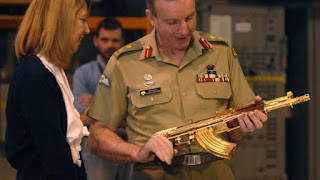
In a glass case in the modern conflicts and Middle East galleries at the Australian War Memorial hangs a gold-plated assault rifle, an AK47 issued by Saddam Hussein to one of his personal guards. It was "discovered" among a cache of gold-plated weapons (the explanatory plaque says) by the United States 101st Airborne Division in Kirkuk, and given to an Australian major-general visiting US headquarters in Northern Iraq. Patrick O'Hara says it's "war booty". He is a former volunteer guide and before that a long-time education officer at the memorial who has resigned in disgust. "Charles Bean designed the memorial to allow people to try to understand what Australian soldiers went through during war. It was designed to show the ugly reality of war. It wasn't meant to be political, gloating or a trophy cabinet," he tells me. O'Hara loves and respects the War Memorial "and all that it is meant to represent" but he sees the display...

The seductions of the beach

Image
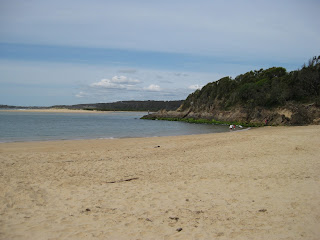
If the bush represents the sweat of hard work and childhoods in suburbs sprawling into a scrub frontier then the bleached sand and cool sea is where we choose to escape our pimpled and later ageing selves. So contends author Robert Drewe in his new book, The Beach . He argues the beach is part of the Australian consciousness at many levels. We are called to the edges of the continent to find refreshment and the promise of renewal. But it's also where early intrepid travellers, settlers and convicts first encountered Aboriginal peoples; where mutual curiosity turned into clashes. There are more than 11,000 sandy beaches in Australia, each with their own secrets, sand flies, jellyfish and near or actual drownings. They are where our anxieties play out (shark!) and where our moral values are tested. They are where people experience intimacy and intrusion, rescue and rejection. The backdrop for the Cronulla riots a decade ago, the beach represents a lifestyle and philosophy, view...

Christmas & New Year offer time to reflect on peace and violence around us

Image
This time of year brings to mind a stenciled piece of graffiti. It shows a child with his face scrunched up, crying over a pile of wrapped gifts. "I wanted you present, not these!" This is a time when we would like to slow down to be more present. And it's a time when we are invited to think about peace. In 2015 violence seemed to be everywhere, much of it arbitrary and horrendous. We were disturbed by it, continuous news magnified it in our minds. Martin Dempsey, the chairman of the United States Joint Chiefs of Staff has often repeated that "we are living in the most dangerous of times". But folk like Harvard psychology professor Steven Pinker say the idea that things are getting worse is one of the great misconceptions of our time. "Accounts of daily life in medieval and early modern Europe reveal a society soaked in blood and gore," he says reflecting on his best-selling book The Better Angels of Our Nature . "For entertainment, one co...

War, remembering and forgetting

For one brief minute on the morning of November 11 the Australian War Memorial will come close to becoming what its director Brendan Nelson says it is every day of the year: the soul of our nation. Set in a beautiful location at the base of Mount Ainslie on a site originally earmarked by Walter and Marion Griffin for leisure gardens and a national celebration centre, it is certainly solemn. Much of it is dedicated to the proposition that Australia was forged in the Great War. But was it? European Australia began as a series of penal colonies that waged wars against the local inhabitants, in the so-called Frontier Wars. It later welcomed people from many lands and crafted one of the world's first written constitutions. There was more than enough blood, machine and mettle to forge a nation – if that's what it takes to come of age – before World War I. We're told that Australia was eager to participate. But it twice rejected conscription in referendums. They too were m...