Posts

Showing posts with the label inequality

Learning lessons from the London Grenfell Tower fire
Image
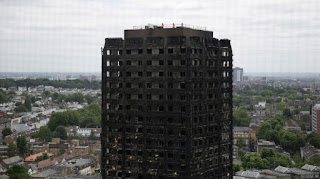
The burnt out shell of London's Grenfell Tower is a tragic reminder of the important role of governments in ensuring people are properly housed. Outsourcing or weakly enforcing standards leads to calamity. Grenfell Tower was clad with highly combustible foam and aluminum, chosen because it was cheaper. The building had no sprinkler system or evacuation plan. The residents were mostly poor. Under pressure, British Prime Minister Theresa May conceded that "for too long in our country, under governments of both colours, we simply haven't given enough attention to social housing". "This itself is actually a symptom of an even more fundamental issue," she said. "In this tower just a few miles from the houses of parliament, and in the heart of our great city, people live a fundamentally different life, do not feel the state works for them and are therefore mistrustful of it." In Australia we are chronically short of public and social housing. We ...

The legacy of the Rio Games?

Image
For all the triumphs of the two-week Rio Games, I have found this one hard to get into. There’s a sick feeling, not about the sacrifice and tears of competitors giving it all they can, but the sacrifice of the Brazilian people. Teachers, and others, who haven’t still been paid for months to help finance this show have also struggled to get into the Olympics. According to the respected Datafolha agency, most Brazilians have had no interest in the Games. Most expect the Games to hurt Brazil (The Olympics are notorious, wherever they are held, for promising growth and then delivering anything but a growth shot). Bumper stickers have rearranged the Olympic rings into a four-letter word. These Games are further away than any other in recent memory from the ideals of the founder of modern Olympics, Pierre de Coubertin. Coubertin advanced the need for an event every four years that would honour of “the constant renewal of mankind”. He preached a gospel of the power of sport. “Have fait...

Too little skin in the Indigenous development game

Image
This week's Four Corners revealed Aboriginal communities being ripped off by "weasels" – middlemen who disappear after cashing in on highly-lucrative government contracts meant to benefit disadvantaged people. The program put a spotlight on 'whitefella charlatans'; obvious targets of public outrage. Yet on television their victims weren't particularly angry, just sad that once again their trust had been betrayed. They ought to be angry at successive governments of all levels that have set aside money for them but not done the work needed to make sure it reached them. Governments must know that capacity constraints in communities make members vulnerable to people who work corruptly. In my time working in Indigenous development, I heard of bureaucrats who "throw money over the fence and expect communities to put together the puzzle". Communities are set up to fail in part because departments working with them operate from a paradigm of service ...

For education's sake, we should question NAPLAN

Image
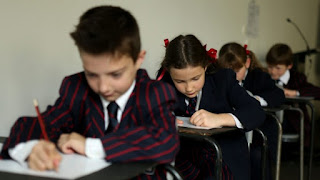
Parents be warned. As school resumes, there's escalating concern that NAPLAN, the annual assessment for students in years 3, 5, 7 and 9, is producing awful consequences. In a new book sarcastically titled How to Pass a Test , long-time teacher Lynne Edwards begs readers not to pick up the so-called "education kits" now on sale in news agencies and post offices. She says it's bad enough that NAPLAN and the preparation for it soaks up time that should be spent teaching but it's worse if parents further harass their children at home. NAPLAN testing is supposed to improve the quality of education by producing data that can be used to redirect resources to areas of need. But too often it is redirected to well-resourced parents, leaving poorly performing schools even worse off. (We know that the real issue is not the differences between schools but differences within schools as students at the same school struggle to all rise together with the tide.) The resul...

Newstart not living up to its name

What do multitasking and the low level of Newstart have in common? New research suggests they both do something to our brain, and in Anti-Poverty Week the new Social Services Minister, Christian Porter, ought to pay attention. As our new Prime Minister is fond of telling us, our future is increasingly tied up in technology (when has it not?). It inevitably means more multitasking. These days employers email us at night. We shop for shoes at our desks. We arrange business meetings while at the supermarket. Our children flip between devices while doing their homework. As more and more things fight for our attention our mental bandwidth shrinks. There's only so much attention we can offer. Splitting it more and more ways impairs our ability to do anything well. Harvard University professor Sendhil Mullainathan provides the link to the unemployment benefit Newstart. At just $261.70 per week, it's hopelessly inadequate. Pensioners get $394.20 per week. Politicians staying in...

Legacy of racist laws not easily erased

Image
A seminal moment in Martin Luther King's early life was getting a bus across town to Booker T. Washington high school. People of his colour were told to sit at the back. "I would end up having to go to the back of that bus with my body, but every time I got on that bus I left my mind on the front seat," he wrote. "And I said to myself: one of these days I'm going to put my body there where my mind is." "I had seen police brutality with my own eyes and watched Negroes receive the most tragic injustice in the courts," the preacher and civil rights activist said in the mid-20th century. "I also learned that the inseparable twin of racial injustice was economic injustice." These days anyone can ride in the front. Barack Obama occupies the White House. But barriers remain that prevent the true joining of bodies and minds, and not just in the United States. In Ferguson, Missouri, and in South Carolina police officers routinely shoot unar...

Struggle Street and a hard-earned win for charities

Image
You wouldn't know it from the budget papers, but the Australian Charities and Not-for-profits Commission is here to stay. Budget Related Paper 1.16 uses the same studiously neutral language it used last time... "The ACNC provides independent determination and registration of charities, health promotion institutions, and public benevolent institutions for all Commonwealth purposes." "The implementation of a 'report-once, use-often' general reporting framework is to reduce red tape and simplify the regulatory framework... to make it easier for not-for-profits to deliver their services to the community." "On March 19, 2014, the government introduced the Australian Charities and Not-for-profits Commission Repeal Bill. However, the ACNC will continue to operate in its current form whilst the current ACNC Act remains in effect and the program expenses reflect this." What's happened behind the scenes is that the government has given up a...

Growing education divide that ricochets

Monday was a magic day for 5000 newly minted Year 7 students. They went to high school for the very first time. But in Canberra they did it differently. Whereas in NSW the bulk of them went to government schools (58 per cent) in the ACT only 49 per cent went to the ACT government's own schools. The majority - 51 per cent - went to private schools, around 1700 to Catholic schools and another 900 to others if previous year's figures are any guide. The ACT has the uncomfortable distinction of being the first state in the nation in which more parents send their children to private high schools than government ones. It's all the odder when you consider that ACT government high (and primary) schools are among the nation's best, and odder still when you remember that the ACT is largely a government town. Yet I have heard countless times from parents and friends that they are going private because they are not going to "sacrifice" their children. What's go...