Posts

Showing posts with the label racism

It hurt as I breathed: history repeats itself

Image
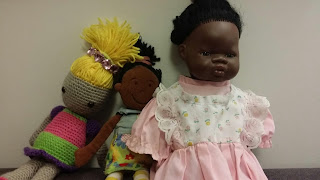
“They would catch me, I saw, half turning round to see my rear but still kicking my heels forward. ‘Nigger nigger - catch a nigger by the toe, eeny meany miney mo!’.” So begins a story by African American Peggy Dye, describing her childhood when she crossed uptown Illinois to study in a majority white school with a small black quota. It was a school her parents encouraged her to attend, knowing she was smart. But there were risks. It was a school full of white boys who thought all Negroes (the word used) were “cold-black and violent”. They’d chase her home. “‘Get away from me!’ I panted as I pumped my 18-inch legs. ‘Please!’ and I felt the tears in my eyes. I was running and trying so hard not to fight, choking down the anger. I was resisting. I felt a big pain in my stomach. Was it anger? It was a rock and it rolled inside my ribs and hurt as I breathed.” Still running It was the late 1940s. Dye had just started first grade when her father told her, “‘It’s a war baby, and don’...
Being Coloured - Race and politics in the New South Africa

I am reading  Born A Crime.  the recently published memoir of comedian and television host Trevor Noah . Noah grew up in South Africa. His autobiography is a powerful reminder of the brutality of racism that keeps the world's colonised people poor.  Noah speaks to me at many levels as an Australian who spent my first 6 years in South Africa classified as 'Coloured': a person of mixed race. Noah doesn't paint a flattering picture of the coloured community. In 2008 I produced a radio doco on my journey 'home':  Being Coloured . In it my grandfather observes, "You were what they made you". Apartheid South Africa divided not just its black and white citizens but other race groups. The political system bred violence and pettiness. Its legacy continues. I travelled back to Durban with my mother, Lillian, to try and discover my ancestry and what it meant during apartheid to be 'Coloured'. Does the label still stick in the new South Africa? The d...

A public health issue: Alan Jones and his violent metaphors

Image
Countless firms have pulled their support and advertising from Alan Jones’ radio program after his Jacinda Ardern comments. Just what will it take to suspend him? The managers of the station should take him off the airwaves, but not just for reasons of language. The reason to pull him off is public health. Let me explain. One of the greatest threats to health is violence. Australia has a shocking record of violence against women. On average, one woman a week is murdered by her current or former partner. Overwhelmingly, perpetratators of domestic or family violence against women and children are male. Factors associated with gender inequality are the most consistent predictors of violence against women including male peer to peer relations that emphasise aggression and disrespect towards women. Jones, who appears to have trouble with women of influence, feeds and helps legitimise an already-existing set of attitudes that condone violence. There is mounting evidence that pub...

Post election: Ken Wyatt's historic gig and daring to hope for Australia reMADE

Image
What a Reconciliation Week. Not only were we reconciling differences after a bruising election, but a respected Indigenous man was appointed Minister for Indigenous Australians, the first Indigenous Australian to be given that responsibility. Ken Wyatt was subjected to racist taunts during his campaign for the West Australian seat of Hasluck in 2010. After his narrow win for the Liberals, some people who voted for him complained they didn't realise he was Aboriginal. He was born on a mission farm, a former home for young Indigenous children removed from their families. His mother was one of them. In his maiden speech Wyatt thanked Kevin Rudd for the 2008 national apology to stolen generations. When he heard it, in his office in the West Australian department of health where he was director of Aboriginal health, he cried. "My mother and her siblings, along with many others, did not live to hear the words delivered in the apology, which would have meant a great deal to t...

New media and violence: an old problem meets the modern era

Image
History is littered with examples where propaganda has led to appalling acts of violence. That's why the rise of social media in the hands of extreme groups is a deep concern, as is the role of public figures in potentially inflaming hate. Who could forget Rwanda. Twenty-five years ago this month the world heard of the genocide against the Tutsi. I was in South Africa covering that country's historic election of Nelson Mandela, a moment of euphoria, when shocking news trickled in of the mass murder of up to 70 per cent of Rwanda's Tutsi people by members of the Hutu majority. Civil war had been brewing in Rwanda before April, 1994. But the use of the media in skilled hands brought ordinary people, who had lived together for hundred of years, to extreme violence. The Tutsi were labelled as demons, rich and avaricious, out to get the Hutu. The Hutu were called on to kill members of a Tutsi rebel group that threatened the government, and their "accomplices" -...

A Christchurch reflection

Image
Like many around the world, I have this week found myself in dismay-driven prayer, heartfelt hope for the world to be better, safer. As a person of colour, it is deeply concerning that the alleged perpetrator in the Christchurch massacres is an Australian citizen espousing white-supremacy and publishing a manifesto of hate. The rise of right-wing hate ideology is indisputable. The Internet has helped the cause. Social media has made white-supremacists more visible and international. In small, bizarre and accumulative ways, a fear of Muslims, that objectifies them, has shown its ugly head online. Platforms including Facebook, Instagram and YouTube have not exercised as much moral authority as they should have. They have relied on pressure from individual governments, rather than being proactive from the get-go in self-managing and limiting hate-speech and the live-streaming of violence. I have long worried about social media’s hunger for gut-wrenching and gratuitous content; it...

ART NOT APART: We can't fight hate with hate

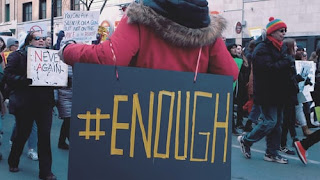
I had the privilege of being selected for and participating in this year's Art Not Apart festival in Canberra. My contribution explored protest sites and the rise of inequality and racism. It's not easy keeping cool when your passionate about a good cause. Even progressives in the US determined to rally recently in support of a more inclusive society resorted to physical violence when confronting neo-Nazis. Confrontation of evil by the power of love with non-violent protest, as Martin Luther King wrote, is the most potent weapon available to oppressed people in their struggle for freedom. But when you are invested in social reform and impacted by injustice, it ain't easy to keep cool, any time, any where. To read more, see headline image, go to: https://artnotapart.com/artist/2019/toni-hassan/

The important and humbling work of doing diversity

Image
Growing up in suburban Sydney, I broke bread with all kinds. The dismantling of the White Australia policy in the 1960s and 1970s had allowed my parents to bring me from South Africa, aspire to belong and buy a house on a quarter acre block. My father started a business. Schooled in Islam, he ensured we never ate pork. I went to a public school alongside Aboriginal, Slavic, Italian, Greek and Malay students, as well as Anglos. Embracing the Jesus story, I found mentors in a diverse and welcoming community in Anglican and Baptist churches while still connected to my Muslim family. Canberra is less diverse, but still very welcoming. Here in the national capital, Senator Fraser Anning made a splash when he called for an end to immigrants who do not reflect “the historic European Christian composition of Australian society”. He’s been roundly condemned. What Anning may not have heard loud and clear is that Jesus was not European. He’d be forgiven for thinking otherwise if in a Wes...

The slow and sincere journey towards reconciliation

Image
Most of us know about the Aboriginal Tent Embassy, but far fewer know about the first Aboriginal protest outside Old Parliament House, when it opened in 1927. Two Wiradjuri men, Jimmy Clements (also known as ‘King Billy’, pictured) and John Noble (known as ‘Marvellous’) walked for a week from Brungle mission in the Riverina. On arrival they insisted on meeting the Duke and Duchess of York who were there to declare it open. They told a newspaper they wanted to make it clear they had “sovereign rights to the Federal Territory”. The same newspaper reported some years later that when Noble was in trouble with white man’s law he stood up in court and said to the judge something like: “If it wasn't for Jimmy Cook you wouldn't be sitting where you are and I wouldn't be standing where I am”. Nine decades on, there’s finally some momentum for a treaty, at least at the state level. Victoria, led by Labor’s Daniel Andrews, is the most advanced, having appointed a treaty commis...

Violence in Virginia reflects worldwide national identity debates

Violence in Charlottesville in U.S. Virginia this week between neo-Nazis and anti-racism groups is a symptom of resentment over social change, how history is remembered and the heroes communities decide to celebrate or reject. In Virginia the clashes were sparked by heated debate about the future of a statue of Confederate General, Robert E Lee. "It was erected at a time when there was this rising myth of the glory of the south, the white nationalist south," says local councillor Kristin Szakos who has sought to move the statue from the public square, prompting outrage from the far-right. "Lee was a symbol of all that was good in pre-war southern society - meaning slavery, white people had dominance and economic power," Szakos told the ABC. Hours after the Charlottesville violence, anti-racist protesters in North Carolina toppled a Confederate statue there - pulling it to the ground and stomping on it. White nationalist organisers see themselves as defenders ...

Teams have opponents

"Teams have opponents. Communities have friends." That was the message on the billboard of the Ainslie Church of Christ this month. Members of its community were trying to send a message to the Prime Minister. They are worried that his oft-repeated use of the phrase "Team Australia" pulls people apart rather than brings them together. Tony Abbott used the phrase late last year when announcing plans to scoop up metadata as part of the war on terror. He used it again in May when talking about the importance of integrating asylum seekers into the rest of the country. "What we have always said since coming to office back in September of 2013 is that we expect people to be part of Team Australia," he said. Race Discrimination Commissioner Tim Soutphommasane​ is worried about the term, warning that manufactured integration can "do more to divide than unite". But what does the term mean? Keysar Trad, founder of the Islamic Friendship Associati...

Legacy of racist laws not easily erased

Image
A seminal moment in Martin Luther King's early life was getting a bus across town to Booker T. Washington high school. People of his colour were told to sit at the back. "I would end up having to go to the back of that bus with my body, but every time I got on that bus I left my mind on the front seat," he wrote. "And I said to myself: one of these days I'm going to put my body there where my mind is." "I had seen police brutality with my own eyes and watched Negroes receive the most tragic injustice in the courts," the preacher and civil rights activist said in the mid-20th century. "I also learned that the inseparable twin of racial injustice was economic injustice." These days anyone can ride in the front. Barack Obama occupies the White House. But barriers remain that prevent the true joining of bodies and minds, and not just in the United States. In Ferguson, Missouri, and in South Carolina police officers routinely shoot unar...

'Angry nation' on verge of an Arab Spring?

Anger helped bring an end to apartheid but what is it doing to South Africa now? The recent high profile death of a Mozambican taxi driver tortured by South African police provoked Nelson Mandela's wife, Graca Machel, to sound an alarm. South Africa, she said, was “an angry nation” on the brink. Taxi driver Mido Macia was quiet, unassuming. He'd lived in South Africa 17 years. He was tied to the back of a police vehicle in a Gauteng township and dragged through the streets. He was later found dead in police custody. It is part of a disturbing pattern of police brutality targeting black foreigners as the number of economic and political refugees balloons. Mass unemployment (70% of young have no secure employment) is building resentment. "Immigrants have lowered the wage rate, there's no doubt about that, and whole shifts of workers have been fired in one go and replaced by immigrants who have no union representation,” Patrick Bond, Director of the Centre for Ci...