Posts

Showing posts with the label parenting

Feed Play Love: Laying the groundwork for a healthy digital family life

The COVID-19 lockdown has, among other things, laid bare our modern lives and how dependent we are on digital technology for just about everything. Creating boundaries with our children around screen-use just got a whole lot harder. This period has also provoked questions around the role of education. What is the purpose of school? Students can find information on everything online but knowledge found there is only really useful when it's integrated with what they know. Integration is supported by conversation. A class environment can provide that, so too, the home. Last September I recorded this podcast which explores some of the above. Listen to Feed Play Love: Laying the groundwork for a healthy digital family life here
Book review: Families in the Digital Age

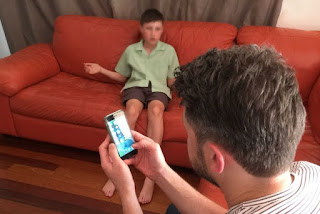
Not turning my child into a zombie with no friends (but lots of likes) by Devin Bowles  Toni Hassan’s Families in the Digital Age: Every parent’s guide is an invitation to deep thought and  dialogue about the effect of social media and pervasive smart phones on our children. My interest in  this book was initially captured because I am a father, and this book should be mandatory reading  for all Australian parents. Before long, Hassan convinced me that the public health implications are  profound. This hugely important topic has gone largely unnoticed, in part because personal digital  technologies have rapidly become so integrated with our lives that they do not invite comment or  introspection. There are no ‘digital natives’, even if younger generations have been given that label. As a species,  we evolved brains that grow and change based on our environments. Our brains develop as they  should only when environments and stimuli are right....

The smartphone has become a metronome. This is how we change the beat

Image
Without thinking about it much, children mimic their parents. It was when my husband — a veteran journalist — and I found ourselves glued to our phones for work at home, and tweeting compulsively, that I began to worry about what it was teaching our kids. What were we modelling? What was it doing to us? We were increasingly alone while together, particularly after our young teens retreated into their bedrooms to use their own smartphones, a development that quickened their inevitable withdrawal from us. Cyberspace is more intense and exciting than the real world, a world of continuous competition and commerce. It's also easier to navigate. But what grabs our attention there isn't necessarily what's needed for us to grow well. While we were working out boundaries for our children, I began to think about boundaries for us, looking for other ways to find joy and meaning in our own lives in the hope we could spark it in our kids, because it isn't children who are driv...

In the shadow of Neverland: a journey from fandom to pathos

Image
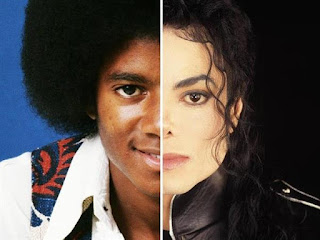
Here’s the thing. A lot of people from Oprah down suspected Michael Jackson of pedophilia but he continued, while alive, to live with impunity. Finally two men have come forward to speak their truth and fulsomely. “ Leaving Neverland, ” the disturbing documentary that continues to make headlines around the world should surprise no one and yet Jackson’s tenacious fans will hold onto their version of the King of Pop, regardless. Like many of them, I grew up with Mowtown music. Thriller had been rocking the charts when, as a junior high school student, I celebrated my crush one school dress-up day. I wore a twist on the Billie Jean outfit; one white glove, a red jacket, a pair of shiny-fly glasses, white slacks and my mother's low-heeled leather loafers that promised to defy gravity on the dance floor. My hair was short, shiny and curly. My nose was itself. Over the years I lost interest in the star. By the time the first case of alleged child molestation was before a US court, ...

Let's review the value of school reports

End-of-year school reports are making their way to parents and carers. For many, it's a major contact with the school. Most look forward to the reports, even if their children don't. But what's their value? Do they actually tell parents anything useful? Teachers generally hate writing them. They take up a lot of time, and teachers don't believe they are allowed to be as honest as they would like to be. Their reports are censored. They didn't used to be. Peter Frost (not his real name) teaches in a NSW public high school. "I used to be able to write, for example, that student A had been persistently disruptive, that he didn't follow instructions," he tells me. "Then I was told I couldn't say that. The principal told me not to be negative. But I was trying to be truthful." Truth wasn't appreciated. His principal told him that if a student was described as disruptive, it reflected badly on the teacher and the school. It was bette...

School leavers need celebration options that don't include grog

Image
It's the schoolies week season. Not taking any risks, an acquaintance with a 17-year old daughter booked a trip for her and her friend to a tropical island, each with their father. Anything to avoid an underage booze-up. It's that time of year when there's a rash of parties that provide alcohol to children. The school formals are (meant to be) alcohol-free but the pre and post-formal parties are not. It's well-established that consuming alcohol early in life, right up to age 21, damages developing brains. Early consumption seems to lead to alcohol-dependence and other problems later in life. Supervised drinking isn't safe either. Studies show that when parents supply alcohol at children's celebrations, thinking they are teaching them about control, they actually encourage heavier drinking. Exposure to alcohol leads to drinking. The message seems to be getting through. Official statistics show Australian teenagers are drinking less and start to drink alco...

Domestic chores: Time-use survey shows equality starts at home

As the media gears up to cover what will be a tumultuous year in federal and international politics, it's worthwhile taking stock to examine what's happening in other very local politics: the one inside our homes. In the little Australian book Kids' View of the World, five-year old Sam says "mums do cooking for us after a hard day". Six-year old Brooke says "dads just eat junk and are always at work". It's harsh, but not far removed from what happens at my place. The latest Bureau of Statistics time-use survey (budget cuts mean it actually took place in 2006) found Australian women spent two hours 27 minutes per day on housework and men 43 minutes. Women spent two hours 39 minutes per day on childcare and men, less than half that (one hour six minutes). Analysis of a more recent French survey by the Melbourne Institute of Applied Economic and Social Research finds that even where women dedicate themselves to their careers more than their part...

Give the gift of quality time this Christmas

Image
Here's a radical idea this Christmas. Don't buy just more stuff for your loved ones. Give them your time. Time is the ultimate non-renewable resource. The irony of giving your time to others, mindfully, involves being less time-obsessed. Each of doesn't really have more or less time. We have the same amount. You may have heard the one about the bloke who was asked, "If you had only 48 hours left to live, how would you spend them?" One hour at a time, he replied. We live in an intriguing period of human history, in which we are more connected around the clock. I can be in touch with my teenage children by phone all day. Texts offer discrete bits of information. But e-communication is limited for understanding and learning from each other. Instead, it can fracture communication and make us more impatient, more disengaged. In her 2014 snapshot of Australian children, social capital and communities, Australian National University Professor Sharon Bessell found t...

Whatever you do, don't use the f-word: tips for dealing with a fussy eater

Image
"All my boy will eat is fish fingers," groans a parent I know. "A number of smart people have told me that they only ate fish fingers the first 10 years of their life. They seemed to do all right ... But I'm looking for a recipe that disguises broccoli as fish fingers." While this mum is able to joke about it, we share a common concern: we each have a child dubbed a "fussy eater". So concerned was I about my little person's limited diet that I took myself off this summer to a government-run health session on fussy eaters. Stories emerged from other mums about the horror of anything lumpy; the terror of juice still in its fruit; parents unable to sneak a banana into a milkshake; only custard for breakfast, lunch and dinner, or – as if straight out of Doctor Who – custard and fish fingers. My little person really only likes things that are white, to the point of food racism: white pasta (no sauce, thank-you), mashed potato, white bread (wit...