Posts

Showing posts with the label children and young people

Feed Play Love: Laying the groundwork for a healthy digital family life

The COVID-19 lockdown has, among other things, laid bare our modern lives and how dependent we are on digital technology for just about everything. Creating boundaries with our children around screen-use just got a whole lot harder. This period has also provoked questions around the role of education. What is the purpose of school? Students can find information on everything online but knowledge found there is only really useful when it's integrated with what they know. Integration is supported by conversation. A class environment can provide that, so too, the home. Last September I recorded this podcast which explores some of the above. Listen to Feed Play Love: Laying the groundwork for a healthy digital family life here
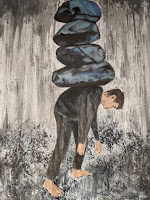
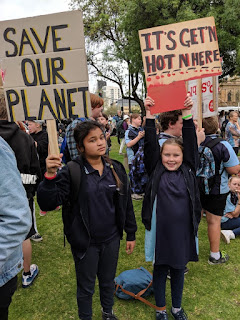
A mother's climate change lament and other paintings

Image
Find the article on my art exhibition on now at the ACT Legislative Assembly

The future of work as the digital disrupts

Australian students are continuing to slide in international performance tables, with ACT students going down about as fast as (but typically still doing better than) those in the rest of Australia. The Organisation for Economic Co-operation and Development conducts its Program for International Student Assessment (PISA) survey of performance in reading, maths and science every three years. It finds that although the performance of Australian students is close to the OECD average, unusually among developed countries, Australia's performance has been getting worse over time. Should it worry us? That depends partly on what we think will be needed for living in and surviving the rest of the century. There's no necessary reason to think it will be maths and science as we've known them. Machines might do those things for us. But a mid-year report by Deloitte Access Economics finds employment has been growing fastest among the least routine jobs, the ones that machines ca...

Book review: Families in the Digital Age

Not turning my child into a zombie with no friends (but lots of likes) by Devin Bowles  Toni Hassan’s Families in the Digital Age: Every parent’s guide is an invitation to deep thought and  dialogue about the effect of social media and pervasive smart phones on our children. My interest in  this book was initially captured because I am a father, and this book should be mandatory reading  for all Australian parents. Before long, Hassan convinced me that the public health implications are  profound. This hugely important topic has gone largely unnoticed, in part because personal digital  technologies have rapidly become so integrated with our lives that they do not invite comment or  introspection. There are no ‘digital natives’, even if younger generations have been given that label. As a species,  we evolved brains that grow and change based on our environments. Our brains develop as they  should only when environments and stimuli are right....

Time to reclaim the lifeblood of human society

Image
In the lead up to last week’s School Strike 4 Climate, a tweet jumped out at me. “Why are so many young people depressed?” it asked, and then presented two different answers. Teenagers: The adults have f***ed up the planet and our future. Adults: It’s the phones. Of course, both might be true. Depression might be sparked by the fate of the planet, but then fed by incremental updates and outrage delivered to smartphones in our pockets all the time. It isn’t what used to happen. Panic about 1980s' concerns such as nuclear war weren’t amplified and fed back to us through a hyperconnected echo chamber. It most certainly is bad for our health. Studies show that as screen time increases, so too do rates of teenage suicide and depression. Lead researcher Jean M. Twenge of San Diego State University compared US statistics on teenage suicide deaths, suicide-related outcomes and adolescents’ depressive symptoms, with new media use. He found adolescents who spent more time on new ...

The smartphone has become a metronome. This is how we change the beat

Image
Without thinking about it much, children mimic their parents. It was when my husband — a veteran journalist — and I found ourselves glued to our phones for work at home, and tweeting compulsively, that I began to worry about what it was teaching our kids. What were we modelling? What was it doing to us? We were increasingly alone while together, particularly after our young teens retreated into their bedrooms to use their own smartphones, a development that quickened their inevitable withdrawal from us. Cyberspace is more intense and exciting than the real world, a world of continuous competition and commerce. It's also easier to navigate. But what grabs our attention there isn't necessarily what's needed for us to grow well. While we were working out boundaries for our children, I began to think about boundaries for us, looking for other ways to find joy and meaning in our own lives in the hope we could spark it in our kids, because it isn't children who are driv...

Alongsiders in Cambodia - Modern slavery exposure tour part 2

Image
I had the privilege of travelling to Cambodia and Thailand this year to see modern slavery for myself. It was challenging but it was also full of hope as I got to see what good looks like. Power and poverty Modern slavery is fundamentally about an abuse of power. It takes many forms, on a continuum with other forms of exploitation. It is an affront to basic human rights and human dignity, which Christians regard as inherent in all who have been created in God’s image. In every case of modern slavery people are denied opportunity and personal freedom. What struck me travelling to Cambodia was how poverty, poor governance, internal conflict and corruption create the perfect cocktail for modern slavery to thrive in, with women and children being the worst impacted (the US State Department estimates that 800,000 people are trafficked across international borders each year, 80 per cent of them women and about half children). Gender imbalance Cambodia, which many Australians have v...

Victoria should make the ACT schools think again about rush into screens

The Victorian Government ought to be congratulated. From next year it will ban the use of smartphones during school in all state schools. Schools are where we expect our children to be safe, to develop co-operative and pro-social skills, and to grow their capacity to focus and become critical thinkers. Smartphones blunt those skills. They are (in the main) a tool for distraction and a weapon for online-bullying. Social media is fueling anxiety. Victoria should make the ACT think about its headlong rush into screens in schools and a mental health crisis. If adults are distracted and harassed by technology in the workplace, then you can be sure that children and young people are too, except that it’s worse for them because they have less wherewithal to withstand it. The part of the brain that controls decision making and considering consequences is less developed. Limiting access to smartphones in schools won’t stop bullying. It’s an old-age problem that starts offline and more ...

In the shadow of Neverland: a journey from fandom to pathos

Image
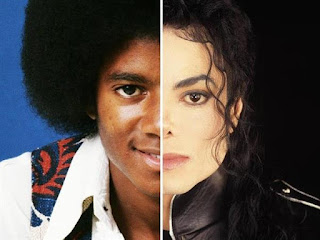
Here’s the thing. A lot of people from Oprah down suspected Michael Jackson of pedophilia but he continued, while alive, to live with impunity. Finally two men have come forward to speak their truth and fulsomely. “ Leaving Neverland, ” the disturbing documentary that continues to make headlines around the world should surprise no one and yet Jackson’s tenacious fans will hold onto their version of the King of Pop, regardless. Like many of them, I grew up with Mowtown music. Thriller had been rocking the charts when, as a junior high school student, I celebrated my crush one school dress-up day. I wore a twist on the Billie Jean outfit; one white glove, a red jacket, a pair of shiny-fly glasses, white slacks and my mother's low-heeled leather loafers that promised to defy gravity on the dance floor. My hair was short, shiny and curly. My nose was itself. Over the years I lost interest in the star. By the time the first case of alleged child molestation was before a US court, ...

Hunger is a justice issue that hurts us all

Image
Within days of a government minister repaying obscene amounts billed for internet use we learnt this week that one in five Australians regularly struggles to afford food. The hunger relief organisation Foodbank categorised one in four of these people as having “very low food security”. It’s worst away from our cities, and when big bills arrive. Schools respond with volunteer-run breakfast clubs. There are about a dozen across Canberra and Queanbeyan, feeding more than 500 children. It's well established that disadvantage is typically experienced across many dimensions. Those dimensions cascade. There is a strong correlation between children going hungry, health complaints and poor education outcomes. Successive studies across many countries by global agency UNICEF show hungry children are also more likely to be bullied and will experience shame and exclusion because with little food at home, they feel less able to have friends over. An infant will typically be full of w...

'I believe you and I will care for you': After the Royal Commission

So big has been the impact of the Royal Commission into Institutional Responses to Child Sexual Abuse that one denomination, Anglican, in this part of Australia — the Diocese of Canberra and Goulburn — has paid out four million dollars to victims over the past three years. Without alarm, the man who was until Easter Anglican Bishop of the Diocese of Canberra and Goulburn told me the compensation costs would only increase. We conducted an ‘exit interview’ in the weeks before he stepped down. “What we want to do is be generous and kind and Christian,” he told me. “We've got facility with our various agencies to draw down money when necessary.” Stuart Robinson is in no doubt that a national redress scheme is essential, but says it’s just one approach. “Parallel to that, we will be working with people for whom that won't work,” he says. “A one size fits all approach is not the best - there have to be different entry points for people to be cared for.” “We are working with...

Rising education inequality should worry us all

In the opening pages of Aldous Huxley's famous dystopian novel Brave New World we are introduced to the Social Predestination Room. On a tour of the room, a supervisor rubs his hands and points to the hatching embryos. Babies will emerge as "socialiased human beings, as Alphas and Epsilons," especially grown to be less intelligent. A keen student asks why the temperature and oxygen levels are set where they are. "Ass!" says the director, "Hasn't it occurred to you that an Epsilon embryo must have an Epsilon environment as well as an Epsilon heredity". I was reminded of the explanation while reading What Price the Gap? Education and Inequality in Australia , a new report from the Public Education Foundation (PEF). It finds that inequality in educational outcomes actually increases as Australian students move through their school years. In other words, disadvantaged students become more disadvantaged over time. Examining six years of testin...

Facebook is ripping society apart, and other reasons to rethink social media

Image
When Chamath Palihapitiya joined Facebook in 2007, it had 50 million users. By the time he left after four years, it had 800 million. He was its vice-president for user growth. These days, he feels tremendously guilty. "I think we all knew in the back of our minds, even though we feigned this whole line that there probably aren't any bad consequences, I think in the deep recesses of our minds we kind of knew something bad could happen," he told the Stanford Business School last month and reported for the first time this week. "The short-term, dopamine-driven feedback loops that we've created are destroying how society works. No civil discourse, no co-operation, misinformation, mistruth, and it's not an American problem - this is not about Russian ads - this is a global problem. "We curate our lives around this perceived sense of perfection, because we get rewarded with these short-term signals - hearts, likes, thumbs-up -and we conflate that with...

Let's review the value of school reports

End-of-year school reports are making their way to parents and carers. For many, it's a major contact with the school. Most look forward to the reports, even if their children don't. But what's their value? Do they actually tell parents anything useful? Teachers generally hate writing them. They take up a lot of time, and teachers don't believe they are allowed to be as honest as they would like to be. Their reports are censored. They didn't used to be. Peter Frost (not his real name) teaches in a NSW public high school. "I used to be able to write, for example, that student A had been persistently disruptive, that he didn't follow instructions," he tells me. "Then I was told I couldn't say that. The principal told me not to be negative. But I was trying to be truthful." Truth wasn't appreciated. His principal told him that if a student was described as disruptive, it reflected badly on the teacher and the school. It was bette...

School leavers need celebration options that don't include grog

Image
It's the schoolies week season. Not taking any risks, an acquaintance with a 17-year old daughter booked a trip for her and her friend to a tropical island, each with their father. Anything to avoid an underage booze-up. It's that time of year when there's a rash of parties that provide alcohol to children. The school formals are (meant to be) alcohol-free but the pre and post-formal parties are not. It's well-established that consuming alcohol early in life, right up to age 21, damages developing brains. Early consumption seems to lead to alcohol-dependence and other problems later in life. Supervised drinking isn't safe either. Studies show that when parents supply alcohol at children's celebrations, thinking they are teaching them about control, they actually encourage heavier drinking. Exposure to alcohol leads to drinking. The message seems to be getting through. Official statistics show Australian teenagers are drinking less and start to drink alco...

School is much more than marks

Image
It came as a surprise earlier this year to see a full-page advertisement by a Canberra private girls high school boasting about the academic success of its high achievers. Each student was shown with her Australian tertiary admission rank score and the name of the university she was accepted into. (Private schools don't have the field to themselves. A number of public schools have better results, and at least one parades them on its website.) I know schools have always been competitive, and I know ATAR scores mean something, but in a month in which thousands of Australian students sat their national literacy and numeracy tests, it's worth asking whether more tests and a greater emphasis on test results actually harms us. An Australian National University lecturer told me recently about a number of first-year students who were so worried about attaining high marks they were paralysed and unable to start assignments. "This is the time of their lives when everything s...

Give the gift of quality time this Christmas

Image
Here's a radical idea this Christmas. Don't buy just more stuff for your loved ones. Give them your time. Time is the ultimate non-renewable resource. The irony of giving your time to others, mindfully, involves being less time-obsessed. Each of doesn't really have more or less time. We have the same amount. You may have heard the one about the bloke who was asked, "If you had only 48 hours left to live, how would you spend them?" One hour at a time, he replied. We live in an intriguing period of human history, in which we are more connected around the clock. I can be in touch with my teenage children by phone all day. Texts offer discrete bits of information. But e-communication is limited for understanding and learning from each other. Instead, it can fracture communication and make us more impatient, more disengaged. In her 2014 snapshot of Australian children, social capital and communities, Australian National University Professor Sharon Bessell found t...

It takes a village to prevent institutional child abuse

"It takes a village..." was perhaps Hillary Clinton's most memorable line. It was given a macabre twist in the Academy award-winning movie Spotlight, about the cover-up of sexual abuse by Catholic Church clergy in Boston. One of the actors observed that "if it takes a village to raise a child, it takes a village to abuse one". We are about to learn more about the NSW "village" of Newcastle, in which an extraordinary number of respected citizens appear, through action or inaction, to have helped cover up allegations of sexual abuse. Four years after Julia Gillard announced the royal commission into institutional responses to abuse, the Anglican Bishop of Newcastle, Greg Thompson, is due to take the stand on Wednesday in Sydney when the commission reconvenes for case study 42. He has already given evidence privately, as perhaps the most senior clergyman to do so. He grew up in the Hunter Valley and was sexually abused while a university student in Ne...

NT juvenile justice system rotten from the top down

Image
The tragedy of this week's Four Corners program is that the damage done to young people in Northern Territory detention centres was largely already on the record. What was missing was the political will to change anything, other than to change things for the worse by legislating to legalise shackling and mechanical restraints. As in the US where the legal system is flawed and it's almost impossible to prosecute an officer if you're poor and black, it's video – provided here by whistleblowers – that's disruptive and making the difference. It shows guards at the Don Dale Youth Detention Centre laughing and swearing at a boy at breaking point, stuck in a dark, sweltering and filthy isolation cell with no fresh water for 15 days straight. Other footage shows a different young person handcuffed, hooded and shackled to a mechanical chair. The Prime Minister wants to know what lessons can be learnt. The NT Children's Commissioner reported on the facility's no...