Posts

Showing posts with the label relationships

Being Coloured - Race and politics in the New South Africa

I am reading  Born A Crime.  the recently published memoir of comedian and television host Trevor Noah . Noah grew up in South Africa. His autobiography is a powerful reminder of the brutality of racism that keeps the world's colonised people poor.  Noah speaks to me at many levels as an Australian who spent my first 6 years in South Africa classified as 'Coloured': a person of mixed race. Noah doesn't paint a flattering picture of the coloured community. In 2008 I produced a radio doco on my journey 'home':  Being Coloured . In it my grandfather observes, "You were what they made you". Apartheid South Africa divided not just its black and white citizens but other race groups. The political system bred violence and pettiness. Its legacy continues. I travelled back to Durban with my mother, Lillian, to try and discover my ancestry and what it meant during apartheid to be 'Coloured'. Does the label still stick in the new South Africa? The d...

Finding the sacred in a time of coronavirus

Image
What happened here? The world is spinning more slowly. At least it feels like that. And yet many of us have more to do, needing to manage complex emotions and children home from school for the foreseeable future. As quiet as it is, our new life has an intensity about it, testing us in ways that can thin our patience and our love but also in ways that might be formational, even transformational. It isn’t easy tuning in to what this time, locked down, has to teach us. Frankly, clarity and purpose can feel elusive. It’s easy to forget what day it is. And, with family life contracting and nowhere to hide at home, our imperfections are on show, amplified, revealing truths about us and our egos. As Franciscan friar Richard Rohr told his email subscribers last week, life is not about us, but we are about life. Try telling that to the teens. My family and I spent the first week of relative isolation pushing furniture around; rearranging our domestic infrastructure to create spaces for...

Meet the neighbours: the trick to Halloween treats

Image
I both love and hate Halloween - probably, honestly, more the latter. It's not that it's "evil" or "of the devil". It's that it's so commercial. For weeks my inbox has been inundated with messages urging me to "avoid the fright" and "earn spooky bonus points" in attempts to get me to buy junk food I don't need. Halloween popped into Australia's consciousness in a vacuum. There is no storytelling attached to it, no cultural significance, no deeper meaning. Elsewhere it derived from a Christian feast on the eve of All Saints' Day, which is November 1, a time for remembering the dead, intertwined with the agricultural rituals of folk communities who gave thanks for the year's harvest. Here, it's just all about the sweets. In Mosman, on Sydney's North Shore, where two streets get besieged by children from all over the city, The Sydney Morning Herald reports some parents are spending $400, some as much...

The smartphone has become a metronome. This is how we change the beat

Image
Without thinking about it much, children mimic their parents. It was when my husband — a veteran journalist — and I found ourselves glued to our phones for work at home, and tweeting compulsively, that I began to worry about what it was teaching our kids. What were we modelling? What was it doing to us? We were increasingly alone while together, particularly after our young teens retreated into their bedrooms to use their own smartphones, a development that quickened their inevitable withdrawal from us. Cyberspace is more intense and exciting than the real world, a world of continuous competition and commerce. It's also easier to navigate. But what grabs our attention there isn't necessarily what's needed for us to grow well. While we were working out boundaries for our children, I began to think about boundaries for us, looking for other ways to find joy and meaning in our own lives in the hope we could spark it in our kids, because it isn't children who are driv...

In the shadow of Neverland: a journey from fandom to pathos

Image
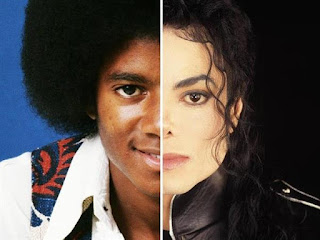
Here’s the thing. A lot of people from Oprah down suspected Michael Jackson of pedophilia but he continued, while alive, to live with impunity. Finally two men have come forward to speak their truth and fulsomely. “ Leaving Neverland, ” the disturbing documentary that continues to make headlines around the world should surprise no one and yet Jackson’s tenacious fans will hold onto their version of the King of Pop, regardless. Like many of them, I grew up with Mowtown music. Thriller had been rocking the charts when, as a junior high school student, I celebrated my crush one school dress-up day. I wore a twist on the Billie Jean outfit; one white glove, a red jacket, a pair of shiny-fly glasses, white slacks and my mother's low-heeled leather loafers that promised to defy gravity on the dance floor. My hair was short, shiny and curly. My nose was itself. Over the years I lost interest in the star. By the time the first case of alleged child molestation was before a US court, ...

This Lent, why not give up speed, live in the present

Image
Australian painter Jeffrey Smart created semi-urban landscapes where huge windowless buildings sat in harsh light. They were props surrounded by small, often puzzled and isolated figures. The landscape taking shape between Majura and Fyshwick has echoes of a Smart. There's something surreal about towering retail temples ribboned by hills dotted with sheep. Bold fluorescent signs point to giant warehouses circled by grey car parks, like moats hugging corrugated exteriors. People move in and out of vehicles in an orderly fashion, dwarfed by the primary-coloured Ikea, Costco and Masters hardware store. Ikea promises a kind of rebirth. Its thick catalogue soothes with new endless possibilities for clean and sunlit interiors. The rooms of our lives can be realigned. Just swipe your card. So mesmerised are we that we imagine waking up the next morning blonde and living with less clutter, comforted inside one of the world's best welfare states, a Scandinavian country built aro...

Responding to the needs of students with complex needs

A 10-year-old boy with autism would likely not have been held in a cage, albeit briefly, had his teachers felt the ACT Education and Training Directorate had been there to help them. Submissions to the expert panel review released last month show ACT teachers felt overwhelmed by the growing numbers of students with disabilities and learning difficulties, and didn't know where to turn. The 280-page report praises "an excellent school system" but points to woefully small numbers of school psychologists, to gaps in supports for students with challenging behaviours, to inadequate training and professional development for teachers, and to inadequate infrastructure; especially withdrawal and calming spaces for children. So even though there was public outrage about the purpose-built blue cage the 10-year old boy was held in, the expert panel recommends the development of spaces with the same aim. Except they would be sensitive to the needs of the child. They must uphold a...

We've been bingeing on social media – it's time for a fast

Image
African National Congress stalwart Mac Maharaj​ spent 12 years in prison plotting with Nelson Mandela before becoming a minister in the first post-apartheid government. Reflecting on that time, Maharaj told the Financial Times that time was the most valuable thing they had. In government, there was no time to talk. In prison Maharaj and Mandela discussed everything. Smashing rocks under South Africa's diamond-bright sky, they argued about ideology, ethics, language, poetry, culture. They were able to listen, and persuade. You get the feeling that in our 21st century democracies time scarcely exists, despite the gravity and complexity of the issues we face. Here, members of parliament run all day trying to keep up with an impossible media cycle. Their staff are on coffee runs around the clock, ticking off engagement boxes, checking social media notifications. Our politicians might have time to test ideas with focus groups, but not with each other. They become experts at ...

Romantic love: what's it good for?

Image
In her best-selling 1970 work The Female Eunuch , Germaine Greer urged a great awakening; for women to exercise their freedoms and stop being passive. The Bachelorette put that to the test, 45 years later. The female lead, 26-year-old Sam Frost, was indeed in the driver's seat, choosing a man on her own terms. She asserted her virility. In the last few episodes she intensely kissed all the men still standing. But on the other hand, Frost was an advertiser's dream. Projected as The Ideal, she was slim, symmetrical, fair-skinned and mostly discreet. Ours is a culture that urges individuality, but then pushes on us perpetual "types". Television does it best. The dwindling list of chosen blokes were all chiseled and sporty. Hundreds of thousands of us watched it because we structure our whole lives around romantic love, philosophy Professor Carrie Ichikawa Jenkins of British Columbia University says. It's a powerful force, yet we rarely wrestle with what i...

Deep democracy: a new model for politics?

It's been said often these past few days that Tony Abbott's prime ministership achieved little of substance. But that doesn't mean it didn't leave a legacy. Adding to the dysfunction of the Labor years, for many it left a deeper disillusionment with politics, a thicker poison. Our disdain for politicians, our fatigue with their combativeness and repetition, remains. We got a lot of blame but few solutions. Malcolm Turnbull's win doesn't yet seem real. Could we really hope for something more sophisticated? Abbott talked about creating opportunities but shut blinds, narrowed pathways. His pattern of support for powerful interests such as banks and coal mining companies over their customers and competing interests further disempowered the least powerful. Abbott talked once about looking after "forgotten families" but made us brittle, more anxious and heartsick. However, he didn't kill our interest in politics. For some he did the opposite - he f...

Sex education: Start young and be frank

If we are serious about tackling interpersonal and family violence, work to prevent it has to start young. But how young? The answer is: as young as kindergarten, age five. That was the recommendation made this week by campaigner Rosie Batty in her appearance before Victoria's Royal Commission into Family Violence. It sits well with the evidence local groups have been amassing here in Canberra, where three women were killed by violent partners in quick succession earlier this year. One of them is YWCA Canberra which, in partnership with ACT Office of Women, has just launched a web-based resource called Relationships Things. It deals with what many parents and even schools don't, or don't deal with well – sex, and questions of consent. Even though sex education is formally part of the curriculum, its delivery is patchy. Too many schools don't do it. "We have the birds and the bees and 'just say no', that's it," says Michael Flood who resea...

Tackling domestic violence, support services are critical

Annie's husband beat her up often. He raped her as well. She was an unfit mother. Useless. He told her so. They had once been in love. Sometimes he was gentle and sweet but at other times he was a maniac, cursing and whipping wildly. "There was lots of alcohol, lots of drug abuse," she told me, almost whispering.  Time sped. Together they had six daughters, all beautiful and healthy. One day Annie* decided that she couldn't pretend any more. She would take herself and the kids away from that life. But how? She was at risk of serious injury to both herself and the children if she left. The fear of violence was itself a powerful weapon. "He'd always take one of the girls with him all the time.  "He knew by doing that he had a pawn to play. It was about control."  There was another problem. Her husband was the bread winner. She worried about homelessness, hunger, the humiliation.  One day a female police officer told her about an emergency ...