Posts

Showing posts with the label poverty

Mental health: making real productivity gains post COVID

Image
For many of us, forced to work at home or to not work at all, the COVID-19 crisis has driven home the importance of mental health and how work interacts with our sense of wellbeing. World leading researchers and mental health experts have warned that as the virus subsides, we will see a big surge in the need for mental health care and pain management. A stretched mental health system will be under increased pressure. Young people, hit hard by the closure of schools and hospitality businesses, are going to be disproportionately affected. So it’s with anticipation then that the Productivity Commission will soon release its final report of its 18-month inquiry into mental health and productivity. The draft report, released in October, was a good start but the final report will need to be more holistic - with the social determinants of mental health as a guiding principle - to inspire confidence. The draft report found that the economic costs of poor mental health were shockingly...
Australia's bushfire emergency

I've been glued to the news for days, restless, easily distracted, feeling helpless. I want to stay informed but at times, it's too much. A bloke on the south coast of New South Wales said, ‘It was like world war three’. With rising anxiety, the threat of losing the lot, blackened daytime skies and scared small children wearing masks and adults holding their breath, it was. The enemy, fire, has been acting for months but the last few days have been truly frightening. These are difficult times, hours that have challenged and tested the very rhythm of everyday life - at a time of year when most of us are on holiday, usually snatching time for rest and play. These days have demanded leaders with empathy, respect and wisdom. Monday this week, exactly twelve days after Christmas is known as the Epiphany. It remembers the journey of the Magi - the three wise men - to Bethlehem. Many of us have had our own very personal epiphanies this season; searing experiences that have...

Climate health has become a mainstream issue, let's treat it like one

Image
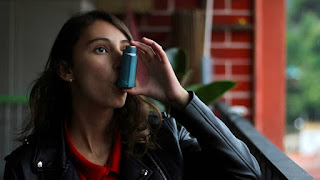
It's frightening not being able to breathe. Having had asthma since birth, managing it is part of the rhythm of my life. Preventative medications have kept me alive, but, like millions of Australians, I occasionally get a small dose of terror when my chest tightens and my blue inhaler is empty or nowhere to be seen. Bushfires have pushed up pollution levels to many times above safe levels in many parts of the country this past week, including in Sydney and Brisbane, which for a few days had air worse than in Beijing’s. Canberra too has been blanketed in dust. We are inadequately prepared for what will become the new norm. People living with asthma (more than one in ten of us) and others sensitive to smoke will have to stay indoors for longer. Prolonged poor air quality will hurt us all. The latest edition of the MJA–Lancet Countdown on health and climate change came out this month, offering a global and an Australian national assessment. The report examined 41 indicators ac...

Alongsiders in Cambodia - Modern slavery exposure tour part 2

Image
I had the privilege of travelling to Cambodia and Thailand this year to see modern slavery for myself. It was challenging but it was also full of hope as I got to see what good looks like. Power and poverty Modern slavery is fundamentally about an abuse of power. It takes many forms, on a continuum with other forms of exploitation. It is an affront to basic human rights and human dignity, which Christians regard as inherent in all who have been created in God’s image. In every case of modern slavery people are denied opportunity and personal freedom. What struck me travelling to Cambodia was how poverty, poor governance, internal conflict and corruption create the perfect cocktail for modern slavery to thrive in, with women and children being the worst impacted (the US State Department estimates that 800,000 people are trafficked across international borders each year, 80 per cent of them women and about half children). Gender imbalance Cambodia, which many Australians have v...

Time to recast Australia's role in the region

Image
A new or re-elected government will give us a chance to better support our neighbours in Asia and the Pacific. The behaviour of the last one hasn't been good. It has repeatedly used the aid budget as a sort of automatic teller machine to take money from development in order to get its budget in order. A glaring example was the $55 million dollar refugee resettlement deal with very poor and dictator-led Cambodia. About $40 million came out of aid while $15 million was directed for resettlement services and support. Signed in 2014 by Scott Morrison as immigration minister, it was an abject failure. Only four people accepted offers of resettlement from Nauru. Only a Syrian man (with his family) is left but he's now hoping to move to Canada. "Why is your country doing this?," perplexed Cambodians asked Australians in Phnom Penh at the time of the deal. "We all know where the money will end up." Corruption permeates Cambodia. The deal wasn't directed (a...

Scourge of modern slavery that taints Australian business

Image
My great great grandfather was an indentured labourer. I do not know exactly what happened to him, other than that he was taken from India to an island off Southern Africa and forced to work for the British Empire. I'd be forgiven for thinking his experience sits in the past. British philanthropist William Wilberforce helped win the battle against slavery in the 1800s. But the reality today is different. Wilberforce would be astounded to discover that more than two centuries after his death there are significant reports of “modern slavery” in environments as diverse as the factories of Dhaka, London’s backstreets and Canberra’s embassies and brothels. Many of those who have campaigned for an Australian Modern Slavery Act have seen it up close. One is a daughter of mining magnate Andrew Forrest who met forced sex workers as young as nine while volunteering at an orphanage in Nepal. Many Australians are the descendants of slaves. Convicts supplied slave labour after settleme...

Valuing art and those that make it

Image
Don't give up your day job. You'll hear it again and again if you are just starting out as an artist, and for good reason. Artists down the centuries have been hybrids. They work one or two unrelated paid jobs so they can work in the arts for enjoyment, for "psychic income". It's the reason so many great compositions, canvases and films are created, for non-monetary benefits such as joy in seeing a vision realised, peer recognition, fame and the prospect of influencing public opinion. Of course some artists actually manage to make a living through what they do. But most never scrape together enough from art to live above the poverty line, despite a sympathetic tax system, government subsidies and grants. Artists are both liberated and hamstrung by the notion of psychic income. It's their best friend and their worst enemy. They often volunteer their time; give away their work because they want to. "Worse, they ask one another to do the same,...

Newstart not living up to its name

What do multitasking and the low level of Newstart have in common? New research suggests they both do something to our brain, and in Anti-Poverty Week the new Social Services Minister, Christian Porter, ought to pay attention. As our new Prime Minister is fond of telling us, our future is increasingly tied up in technology (when has it not?). It inevitably means more multitasking. These days employers email us at night. We shop for shoes at our desks. We arrange business meetings while at the supermarket. Our children flip between devices while doing their homework. As more and more things fight for our attention our mental bandwidth shrinks. There's only so much attention we can offer. Splitting it more and more ways impairs our ability to do anything well. Harvard University professor Sendhil Mullainathan provides the link to the unemployment benefit Newstart. At just $261.70 per week, it's hopelessly inadequate. Pensioners get $394.20 per week. Politicians staying in...

Poverty is structural

There's a saying in the outback, when it's very cold it's a two-dog night. This particular Saturday afternoon in Canberra, on the wrong side of spring, it was a two-beanie day. People were rugged up as they filed into Tuckerbox at Holy Cross Anglican Church in Hackett to purchase heavily discounted groceries. Tuckerbox is a weekly volunteer-run food outlet designed to assist people struggling with their weekly budgets. It's food that can't be sold commercially due to bad labelling, incorrectly listed weights or fast-approaching use-by dates. Foodbank NSW and ACT collects it from manufacturers and retailers and Tuckerbox "sells" it for a small fee. Reciprocity is important. Customers like it. They are not getting a hand-out. Tuckerbox is a sign of just how tough things have become for many people in Australia's richest city. It is one of several food banks in our suburbs and surrounds. Last month Anglicare opened Food Fair in Queanbeyan. Faith c...