Posts

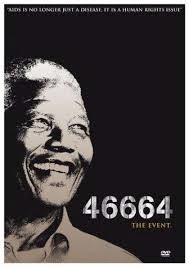
Nelson Mandela's Legacy
Image
Mandela's death has reminded me of the collective madness of apartheid. My children need to be told about it again and again, as children need to everywhere, so that history does not repeat itself. I tell them that marrying Peter would have landed us in jail. The system's obsession with race imprisoned people in their minds as well as in their movement. It stuck people in a holding pattern and dampened the human spirit. But even when caged birds are released they have to be reminded of how to fly. Mandela famously said 'People must learn to hate, and if they can learn to hate, they can be taught to love'. With his passing I wrote this piece for Fairfax Media to remember an extraordinary man and to reflect on the challenges for South Africa's current leaders. The real Mandela challenge - living up to his ideals December 10, 2013 Millions of words have been written about Nelson Rolihlahla Mandela. But it's worth reflecting on his extraordinary inclusive ...
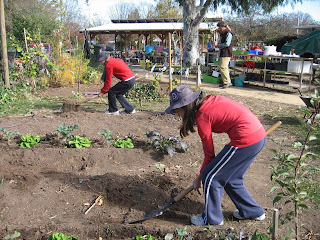
Encouraging active food citizens

Image
First published in Canberra's Child , August 2013 At what age should kids be in the kitchen using sharp knives and a perilously hot stove? At what age should children take part in decisions about what’s for dinner and how it’s made? My hunch is too often children are limited by pre-conceived ideas about what's safe and what's appropriate. In our crazy-busy and harried parenting lives, I am grateful for the invitation to have my children take part in a kitchen garden program (complete with composts and chooks) at their primary school in Canberra, with its spill-on effects. Having the kids become ‘active food citizens’ is not without its risks or downsides. Meals take longer to prepare, basic tasks become full of human drama and the kitchen gets messier (I'll admit that haven’t let go entirely). But I have found that engaged children are more likely to appreciate their food. My nine-year old son has always been interested in cooking and began making porridge for...

'Angry nation' on verge of an Arab Spring?

Anger helped bring an end to apartheid but what is it doing to South Africa now? The recent high profile death of a Mozambican taxi driver tortured by South African police provoked Nelson Mandela's wife, Graca Machel, to sound an alarm. South Africa, she said, was “an angry nation” on the brink. Taxi driver Mido Macia was quiet, unassuming. He'd lived in South Africa 17 years. He was tied to the back of a police vehicle in a Gauteng township and dragged through the streets. He was later found dead in police custody. It is part of a disturbing pattern of police brutality targeting black foreigners as the number of economic and political refugees balloons. Mass unemployment (70% of young have no secure employment) is building resentment. "Immigrants have lowered the wage rate, there's no doubt about that, and whole shifts of workers have been fired in one go and replaced by immigrants who have no union representation,” Patrick Bond, Director of the Centre for Ci...

Identity crises and Redfern Now

I can't rave enough about the ABC TV's excellent series Redfern Now . It's good to see diversity on the small screen. Why has also struck a chord is the show's theme or tension between the image we may have ourselves and the image others expect us to carry. That tension is typically heavily felt by “ethnic” and Indigenous cultures in post colonial societies. The program is set in the inner Sydney suburb of Redfern - the first place to have urban Aboriginal community housing - a place known for its concentration of poverty and clashes with police (much of the old housing is being demolished as the suburb is gentrified with expensive higher density units). The series is a real eye-opener for many Australians who aren't faced with the multiple stresses and issues that the characters do. It has a lot to say about the legacy of displacement, internalising negative messages and the psychology of oppression, the role of education and identity/belonging. Take for ex...

Exit Wounds of an ex-warrior

Image
Today I had the unexpected honour of going to the launch of Exit Wounds by one of Australia's top commanders, retired Major General John Cantwell, in the auspicious Mess Hall at Duntroon, Canberra. I was there by invitation of support author, Greg Bearup, and my long time friend, Lisa Upton. For Cantwell to choose the very heart of Australian Defence Force territory - in the company of the Chief of the ADF - to launch his story confirming his long and tormenting battle with Post Traumatic Stress Disorder (PSTD) was brave indeed. He maintains a deep respect for men and women in uniform while being vulnerable about the impact of his time in war zones. He fires important questions about Australia's military adventures with its western friends in the Middle East. The book, written with surprising poise and detail, is a real eye-opener, a rare glimpse of sleep-deprived life, complex and contradictory, on the front line of the so-called war on terror.

Aboriginal 'embassy' future in sharp view

The Aboriginal Tent Embassy in Canberra - the iconic and, to some, offensive site that kicked off a national conversation about indigenous rights - turns 40 this week. Governments starting with Billy McMahon's have never quite managed to shut it down or belittle it as a symbol of resistance. That, says activist Gary Foley, is a spectacular event in itself. The three-day corroboree in front of Old Parliament House beginning today will draw a big crowd representing scores of languages, Aboriginal nations and communities. Many of the class of the 1972, comrades in the struggle, will not be there. They died too young. Those present will be charged with emotion shouting ''Sovereignty was never ceded!'' They will talk about the road ahead and what should become of the proudly untidy site. Self-proclaimed embassy ambassador Michael Anderson will play on the notion of being an alien in Australia by offering an official stamp from his country in north-west NSW...

A reflection on life and death

A friend died this week. He was 27. Pete Veness had a rare kind of cancer. He told us he was a no one special but we all knew he was. His funeral drew the Prime Minister and priests, authors and artists. He graduated from the journalism school I attended - but a generation later. Tributes flowed for him. Many spoke of his wit and wisdom, his fearlessness and profundity. Pete was angry he could not live into his old age but he was not angry with his God. He railed against things outside of himself; complacency, poverty, triviality and to ask God for the strength to keep going to assist others without expectation. Fellow parishioners at St John's Anglican Church in Canberra where he worshipped commented on how he was a rock to them; how he helped put their troubles in perspective. Pete was hard headed. He was certainly stubborn and doggedly pursued truth - about things of this earth and heaven. He frightened the odd politician at doorstops on the hill but he could have ...