Posts

Romantic love: what's it good for?

Image
In her best-selling 1970 work The Female Eunuch , Germaine Greer urged a great awakening; for women to exercise their freedoms and stop being passive. The Bachelorette put that to the test, 45 years later. The female lead, 26-year-old Sam Frost, was indeed in the driver's seat, choosing a man on her own terms. She asserted her virility. In the last few episodes she intensely kissed all the men still standing. But on the other hand, Frost was an advertiser's dream. Projected as The Ideal, she was slim, symmetrical, fair-skinned and mostly discreet. Ours is a culture that urges individuality, but then pushes on us perpetual "types". Television does it best. The dwindling list of chosen blokes were all chiseled and sporty. Hundreds of thousands of us watched it because we structure our whole lives around romantic love, philosophy Professor Carrie Ichikawa Jenkins of British Columbia University says. It's a powerful force, yet we rarely wrestle with what i...
Newstart not living up to its name

What do multitasking and the low level of Newstart have in common? New research suggests they both do something to our brain, and in Anti-Poverty Week the new Social Services Minister, Christian Porter, ought to pay attention. As our new Prime Minister is fond of telling us, our future is increasingly tied up in technology (when has it not?). It inevitably means more multitasking. These days employers email us at night. We shop for shoes at our desks. We arrange business meetings while at the supermarket. Our children flip between devices while doing their homework. As more and more things fight for our attention our mental bandwidth shrinks. There's only so much attention we can offer. Splitting it more and more ways impairs our ability to do anything well. Harvard University professor Sendhil Mullainathan provides the link to the unemployment benefit Newstart. At just $261.70 per week, it's hopelessly inadequate. Pensioners get $394.20 per week. Politicians staying in...

I Consume Therefore I Am?

Image
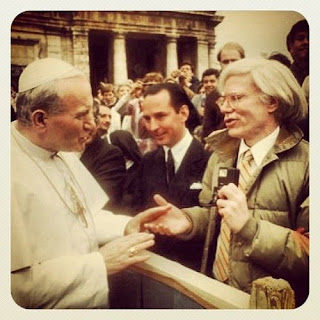
Buying is much more American than thinking, pop artist Andy Warhol once quipped. On last month’s visit to the United States, Catholic Pope Francis generated an enormous market for ‘things’, both spiritual and commercial. It was thick with irony. While personally devoted to simplicity, Francis unleashed a hunger for products that surpassed what is usually associated with rock tours. New York was flooded with Pope posters, 'the Pope gives hope’ t-shirts, Pope caps, Pope bracelets and even Pope cheese that could be spread on Pope toast and then washed down with Pope beer. Instead of singing the hymn “The Great I Am” believers could have been singing “I Consume Therefore I Am”. What is it about the human condition that makes us feel the need to bottle or wear things that are fleeting, even sacred, things that can’t be bottled or worn? Francis talks about being saved by the divine, of being in the world but not of it, yet all around him marketeers are offering objects that promise s...

Deep democracy: a new model for politics?

It's been said often these past few days that Tony Abbott's prime ministership achieved little of substance. But that doesn't mean it didn't leave a legacy. Adding to the dysfunction of the Labor years, for many it left a deeper disillusionment with politics, a thicker poison. Our disdain for politicians, our fatigue with their combativeness and repetition, remains. We got a lot of blame but few solutions. Malcolm Turnbull's win doesn't yet seem real. Could we really hope for something more sophisticated? Abbott talked about creating opportunities but shut blinds, narrowed pathways. His pattern of support for powerful interests such as banks and coal mining companies over their customers and competing interests further disempowered the least powerful. Abbott talked once about looking after "forgotten families" but made us brittle, more anxious and heartsick. However, he didn't kill our interest in politics. For some he did the opposite - he f...

Poverty is structural

There's a saying in the outback, when it's very cold it's a two-dog night. This particular Saturday afternoon in Canberra, on the wrong side of spring, it was a two-beanie day. People were rugged up as they filed into Tuckerbox at Holy Cross Anglican Church in Hackett to purchase heavily discounted groceries. Tuckerbox is a weekly volunteer-run food outlet designed to assist people struggling with their weekly budgets. It's food that can't be sold commercially due to bad labelling, incorrectly listed weights or fast-approaching use-by dates. Foodbank NSW and ACT collects it from manufacturers and retailers and Tuckerbox "sells" it for a small fee. Reciprocity is important. Customers like it. They are not getting a hand-out. Tuckerbox is a sign of just how tough things have become for many people in Australia's richest city. It is one of several food banks in our suburbs and surrounds. Last month Anglicare opened Food Fair in Queanbeyan. Faith c...

Abbott is cutting Australia adrift

For a practicing Catholic supposedly bound to the teaching of his church, Tony Abbott appears to have little regard for one of its key tenets – the unity of humankind. Intense pragmatism has given him the space to divorce belief from behaviour. On climate change, he acts is if Australia is cut off from the rest of the planet. It's the same with international aid. This month, thousands of Australians took part in World Vision's 40 Hour Famine, many going hungry for the first time. It's a profound experience, which often leads to a lifetime of giving. As we give in a private capacity, we expect our Commonwealth government to give on our behalf and commensurate with this country's wealth. But when surveyed, we overestimate the amount our government gives. We are surprised to learn that our contribution to international aid development has dipped to below 1 per cent of our federal budget and without even a debate or special vote on the subject. China now gives more ...

Sex education: Start young and be frank

If we are serious about tackling interpersonal and family violence, work to prevent it has to start young. But how young? The answer is: as young as kindergarten, age five. That was the recommendation made this week by campaigner Rosie Batty in her appearance before Victoria's Royal Commission into Family Violence. It sits well with the evidence local groups have been amassing here in Canberra, where three women were killed by violent partners in quick succession earlier this year. One of them is YWCA Canberra which, in partnership with ACT Office of Women, has just launched a web-based resource called Relationships Things. It deals with what many parents and even schools don't, or don't deal with well – sex, and questions of consent. Even though sex education is formally part of the curriculum, its delivery is patchy. Too many schools don't do it. "We have the birds and the bees and 'just say no', that's it," says Michael Flood who resea...