Posts

Too little skin in the Indigenous development game

Image
This week's Four Corners revealed Aboriginal communities being ripped off by "weasels" – middlemen who disappear after cashing in on highly-lucrative government contracts meant to benefit disadvantaged people. The program put a spotlight on 'whitefella charlatans'; obvious targets of public outrage. Yet on television their victims weren't particularly angry, just sad that once again their trust had been betrayed. They ought to be angry at successive governments of all levels that have set aside money for them but not done the work needed to make sure it reached them. Governments must know that capacity constraints in communities make members vulnerable to people who work corruptly. In my time working in Indigenous development, I heard of bureaucrats who "throw money over the fence and expect communities to put together the puzzle". Communities are set up to fail in part because departments working with them operate from a paradigm of service ...
Let's dig in for public schools - for the common good

Image
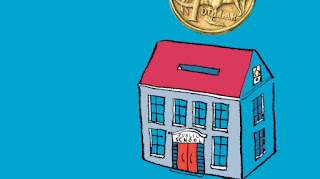
Six-year old Josie (not her real name) was enrolled in a prestigious private elementary school and progressing well, so well that her reading was well above average. Her parents asked the principal if she could be moved up a class or have her classes more personally tailored. They were politely refused. All the talk about child-centred programs and extra resources was "just talk," her father Rick says. "We tried other elite schools who also claimed they had resources to burn for individual care, but in the end they wouldn't budge," he says. "That's not the way we do it here" was the typical response. Then Rick and his wife tried their local public school. The school assessed her, let her sit in on some lessons, and went into overdrive. Josie was put into different groups for different subjects as part of a specially-designed program. They kept an eye on her. They were "just all round brilliant". That year Rick and Josie'...

Digital election campaign means less time to reflect on the issues

Image
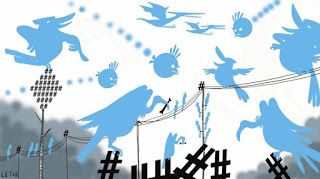
More than any previous election campaign this one will be won or lost using digital media. Millions of us are wedded to Facebook. It's a vast digital kingdom that each party will try to conquer. These days we are living more in our heads and less in the real world. We have fewer embodied and spontaneous experiences with strangers, and more disembodied ones, although usually with people we have chosen to follow; people whose political preferences align with our own. It's made us more tribal, more like the followers of Donald Trump, given us more blindspots. The upside is that many of us are able to engage directly with members of Parliament, even the Prime Minister. And fact-checking is easier once you establish which sources to trust. Meanwhile, journalists are under siege. Those on the campaign trail are tethered to devices that won't let them rest, and they are encouraged to use them to engage with the public when they've time to spare – time they would have ...

Twisted logic of an asylum policy now in disarray

Image
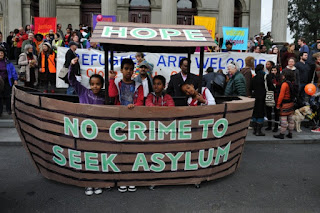
Papua New Guinea's decision to close the Manus Island detention centre after its Supreme Court unanimously declared it a denial of a right to personal liberty and illegal has been met with little more than a declaration that our government will never allow its residents to come to Australia. Minister Peter Dutton's lines sounded well rehearsed. Regional processing and resettlement had stopped many people from losing their lives at sea. They also sounded false. It's a corrupted compassion that seeks to prevent drownings at sea but will tolerate what seems like indefinite life sentences for people who have committed no crimes. Just this week Four Corners told us about one asylum seeker, Hamid Khazae, who paid the ultimate price. Doctors were key advocates in the program. The first wave of health professionals to raise the alarm about care in detention centres spoke out as long as 15 years ago. I produced a documentary for ABC Radio National at the time, quoting the Aust...

Arguments for live export trade ring hollow

Image
Elections are meant to help us decide what we think. But on one important issue we already know. Opinion poll after opinion poll shows most of us want the bloody business of live animal exports stopped. It's our political leaders who are looking the other way. When Four Corners revealed the cruelty of live exports in 2011, MPs were bombarded by correspondence from shocked viewers demanding change. The Gillard government responded by suspending live exports, but was quickly heavied by the industry and allowed live exports to resume with new standards to tackle mistreatment. Its so-called Exporter Supply Chain Assurance Scheme improved conditions but they seem to have slipped back under Tony Abbott, which abolished the Department of Agriculture's live animal export division in 2014, within a year of expanding the live export trade to China. The department is responsible for promoting the trade and also regulating it, but now without the benefit of any serious advisory sup...

Valuing art and those that make it

Image
Don't give up your day job. You'll hear it again and again if you are just starting out as an artist, and for good reason. Artists down the centuries have been hybrids. They work one or two unrelated paid jobs so they can work in the arts for enjoyment, for "psychic income". It's the reason so many great compositions, canvases and films are created, for non-monetary benefits such as joy in seeing a vision realised, peer recognition, fame and the prospect of influencing public opinion. Of course some artists actually manage to make a living through what they do. But most never scrape together enough from art to live above the poverty line, despite a sympathetic tax system, government subsidies and grants. Artists are both liberated and hamstrung by the notion of psychic income. It's their best friend and their worst enemy. They often volunteer their time; give away their work because they want to. "Worse, they ask one another to do the same,...

This Lent, why not give up speed, live in the present

Image
Australian painter Jeffrey Smart created semi-urban landscapes where huge windowless buildings sat in harsh light. They were props surrounded by small, often puzzled and isolated figures. The landscape taking shape between Majura and Fyshwick has echoes of a Smart. There's something surreal about towering retail temples ribboned by hills dotted with sheep. Bold fluorescent signs point to giant warehouses circled by grey car parks, like moats hugging corrugated exteriors. People move in and out of vehicles in an orderly fashion, dwarfed by the primary-coloured Ikea, Costco and Masters hardware store. Ikea promises a kind of rebirth. Its thick catalogue soothes with new endless possibilities for clean and sunlit interiors. The rooms of our lives can be realigned. Just swipe your card. So mesmerised are we that we imagine waking up the next morning blonde and living with less clutter, comforted inside one of the world's best welfare states, a Scandinavian country built aro...