Posts

Free tablets: an election sweetener without nourishment

Image
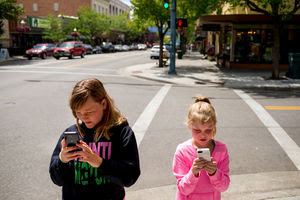
When asked about ACT Labor's election promise to provide free tablets to every public high school student my astute 13-year-old told me, "It's stupid. I'd love a free tablet but no one needs a tablet." It's as if the ACT government didn't ask actual students, the apparent beneficiaries. My teen went on, laughing: "Tablets do less than Chromebooks [Simple, lightweight laptops designed to be used connected to the Internet, with documents that live in the 'cloud'] which are more useful. There's no mouse pad or keyboard. I've never had 'enhanced learning' because of a tablet. What tablet would it be any way? They range from 50 bucks to more than 600." Labor's $17 million campaign sweetener is neither based on evidence about how to achieve an outcome or designed with an outcome in mind. The concerns of parents about the Education Directorate's current bring-your-own-device policy have little to with cost and everyth...

How the Internet is amplifying poor body image

Image
It's Love Your Body Week*. If you don't love your body, you're in good company. The crowd-funded documentary Embrace , in cinemas last month, told us that 70 per cent of girls don't much love their bodies. Forty-five per cent of women of healthy weight think they're overweight. Australians, most of them women, spend $1 million a day on diets. They spend $1 billion a year on cosmetic surgery. The film's message is that while we are more than our bodies, our bodies have become how we measure ourselves. But the film doesn't spend much time on the role of digital technology. Exposure to pornography and the objectification of girls starts young these days, twisted by exposure to violent online games such as Grand Theft Auto that are now played by boys as young as 10. A parent in Embrace speaks for many of us when she says she feels as though her daughter is drowning in a sea of media that reinforces unattainable and dangerous expectations. "I'm in ...

The legacy of the Rio Games?

Image
For all the triumphs of the two-week Rio Games, I have found this one hard to get into. There’s a sick feeling, not about the sacrifice and tears of competitors giving it all they can, but the sacrifice of the Brazilian people. Teachers, and others, who haven’t still been paid for months to help finance this show have also struggled to get into the Olympics. According to the respected Datafolha agency, most Brazilians have had no interest in the Games. Most expect the Games to hurt Brazil (The Olympics are notorious, wherever they are held, for promising growth and then delivering anything but a growth shot). Bumper stickers have rearranged the Olympic rings into a four-letter word. These Games are further away than any other in recent memory from the ideals of the founder of modern Olympics, Pierre de Coubertin. Coubertin advanced the need for an event every four years that would honour of “the constant renewal of mankind”. He preached a gospel of the power of sport. “Have fait...

NT juvenile justice system rotten from the top down

Image
The tragedy of this week's Four Corners program is that the damage done to young people in Northern Territory detention centres was largely already on the record. What was missing was the political will to change anything, other than to change things for the worse by legislating to legalise shackling and mechanical restraints. As in the US where the legal system is flawed and it's almost impossible to prosecute an officer if you're poor and black, it's video – provided here by whistleblowers – that's disruptive and making the difference. It shows guards at the Don Dale Youth Detention Centre laughing and swearing at a boy at breaking point, stuck in a dark, sweltering and filthy isolation cell with no fresh water for 15 days straight. Other footage shows a different young person handcuffed, hooded and shackled to a mechanical chair. The Prime Minister wants to know what lessons can be learnt. The NT Children's Commissioner reported on the facility's no...

Pokemania a sad indictment on the state of play

Image
Nintendo's mobile-gaming "miracle" Pokemon Go may be bringing millennials out of the house – of their own free will – but its success says a lot about how the whole idea of play has changed, for the worse. The app may be free for smart phone users, but this is pure commerce. It's created what marketers want: more spending in the shops that have shelled out fees to become physical destinations for Pokemaniacs. Yuk. Play has always been about constructing and imagining reality. Now it's about flogging products. It's transforming and reducing homes, memorials and cemeteries into spaces for so-called play, with an eye to profit. It's cannibalising real-world geography, in contrast to traditional play that's bounded inside a "magic circle" in which children play act without corporate scripts. Children of my generation born in the 1970s had the freedom to get dirty, to climb trees and experience real danger. My parents and their friends did e...

Ancient lessons on custodianship for the PM

After acting like a sook on election night, Malcolm Turnbull re-emerged this past week as something more akin to a statesman or Indigenous elder. He said he was touched when Bill Shorten rang to concede. Turnbull was carrying his young granddaughter on his hip. It was a "beautiful reminder" that politicians are "trustees" for future generations. He might just be preoccupied with personal legacy but I'm taking hope from this. Indigenous Australian have long been trustees, and storytellers as they hand down wisdom to generations to follow. NAIDOC stands for National Aborigines and Islanders Day Observance Committee. It was fitting that this year's NAIDOC celebrations focused on "songlines" in the same week that a marathon count decided who would govern us and shape our story. Turnbull's grandchildren won't think twice about opening school assemblies and parliaments with a "welcome to country". Yet until the arrival of Kevin Ru...

Too little skin in the Indigenous development game

Image
This week's Four Corners revealed Aboriginal communities being ripped off by "weasels" – middlemen who disappear after cashing in on highly-lucrative government contracts meant to benefit disadvantaged people. The program put a spotlight on 'whitefella charlatans'; obvious targets of public outrage. Yet on television their victims weren't particularly angry, just sad that once again their trust had been betrayed. They ought to be angry at successive governments of all levels that have set aside money for them but not done the work needed to make sure it reached them. Governments must know that capacity constraints in communities make members vulnerable to people who work corruptly. In my time working in Indigenous development, I heard of bureaucrats who "throw money over the fence and expect communities to put together the puzzle". Communities are set up to fail in part because departments working with them operate from a paradigm of service ...