Posts

'I believe you and I will care for you': After the Royal Commission

So big has been the impact of the Royal Commission into Institutional Responses to Child Sexual Abuse that one denomination, Anglican, in this part of Australia — the Diocese of Canberra and Goulburn — has paid out four million dollars to victims over the past three years. Without alarm, the man who was until Easter Anglican Bishop of the Diocese of Canberra and Goulburn told me the compensation costs would only increase. We conducted an ‘exit interview’ in the weeks before he stepped down. “What we want to do is be generous and kind and Christian,” he told me. “We've got facility with our various agencies to draw down money when necessary.” Stuart Robinson is in no doubt that a national redress scheme is essential, but says it’s just one approach. “Parallel to that, we will be working with people for whom that won't work,” he says. “A one size fits all approach is not the best - there have to be different entry points for people to be cared for.” “We are working with...

Rising education inequality should worry us all

In the opening pages of Aldous Huxley's famous dystopian novel Brave New World we are introduced to the Social Predestination Room. On a tour of the room, a supervisor rubs his hands and points to the hatching embryos. Babies will emerge as "socialiased human beings, as Alphas and Epsilons," especially grown to be less intelligent. A keen student asks why the temperature and oxygen levels are set where they are. "Ass!" says the director, "Hasn't it occurred to you that an Epsilon embryo must have an Epsilon environment as well as an Epsilon heredity". I was reminded of the explanation while reading What Price the Gap? Education and Inequality in Australia , a new report from the Public Education Foundation (PEF). It finds that inequality in educational outcomes actually increases as Australian students move through their school years. In other words, disadvantaged students become more disadvantaged over time. Examining six years of testin...

Scourge of modern slavery that taints Australian business

Image
My great great grandfather was an indentured labourer. I do not know exactly what happened to him, other than that he was taken from India to an island off Southern Africa and forced to work for the British Empire. I'd be forgiven for thinking his experience sits in the past. British philanthropist William Wilberforce helped win the battle against slavery in the 1800s. But the reality today is different. Wilberforce would be astounded to discover that more than two centuries after his death there are significant reports of “modern slavery” in environments as diverse as the factories of Dhaka, London’s backstreets and Canberra’s embassies and brothels. Many of those who have campaigned for an Australian Modern Slavery Act have seen it up close. One is a daughter of mining magnate Andrew Forrest who met forced sex workers as young as nine while volunteering at an orphanage in Nepal. Many Australians are the descendants of slaves. Convicts supplied slave labour after settleme...

Music engagement program supports social inclusion

Image
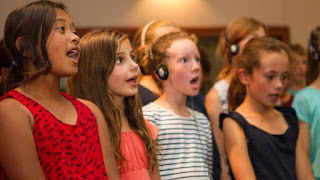
John, a primary school pupil in Canberra's south, was doing badly. At times disruptive and appearing uncaring or unaware of others' feelings, he was at risk of falling behind. Then, over just a few weeks, he and peers learnt songs as part an outreach activity with the music engagement program. The aim was to sing with residents of a local retirement home. The program was funded by the ACT government and run out of the Australian National University's School of Music. Its staff stressed that learning the songs was more important than getting them right. Accuracy can get in the way of what's natural. Even so, John's teachers doubted he would do well. The day before the excursion to St Andrews Village in Hughes, the rehearsal was a lesson in chaos. John pulled faces, swore and made rude finger gestures. On the big day, much to the surprise of those who were there, John needed little or no behaviour management. Video of the 45-minute session shows him talking to...

Govt tries to gag public-interest advocates, again

Image
The Coalition has been waging war against those who've dared to question it since 2013. Its latest gagging grenade has been lobbed under the cover of foreign donations reform, bizarrely egged on by the largely foreign owned mining industry. On election Tony Abbott tried to abolish the newly-legislated Charities Act which enshrined in law the right for charities to engage in political advocacy. There's not much point in (for example) trying to house the homeless without also trying to remove the causes of homelessness. The Act set up an Australian Charities and Not-for-Profits Commission as a one-stop shop for keeping tabs on and assisting charities, as recommended by the Productivity Commission. Abbott lost that battle after the charities themselves appealed to cross benches. Then he tried to strip environment groups of their charitable status. His environment minister Greg Hunt set up an inquiry that recommended they lose the right to tax deductible donations unless th...

Facebook is ripping society apart, and other reasons to rethink social media

Image
When Chamath Palihapitiya joined Facebook in 2007, it had 50 million users. By the time he left after four years, it had 800 million. He was its vice-president for user growth. These days, he feels tremendously guilty. "I think we all knew in the back of our minds, even though we feigned this whole line that there probably aren't any bad consequences, I think in the deep recesses of our minds we kind of knew something bad could happen," he told the Stanford Business School last month and reported for the first time this week. "The short-term, dopamine-driven feedback loops that we've created are destroying how society works. No civil discourse, no co-operation, misinformation, mistruth, and it's not an American problem - this is not about Russian ads - this is a global problem. "We curate our lives around this perceived sense of perfection, because we get rewarded with these short-term signals - hearts, likes, thumbs-up -and we conflate that with...

Let's review the value of school reports

End-of-year school reports are making their way to parents and carers. For many, it's a major contact with the school. Most look forward to the reports, even if their children don't. But what's their value? Do they actually tell parents anything useful? Teachers generally hate writing them. They take up a lot of time, and teachers don't believe they are allowed to be as honest as they would like to be. Their reports are censored. They didn't used to be. Peter Frost (not his real name) teaches in a NSW public high school. "I used to be able to write, for example, that student A had been persistently disruptive, that he didn't follow instructions," he tells me. "Then I was told I couldn't say that. The principal told me not to be negative. But I was trying to be truthful." Truth wasn't appreciated. His principal told him that if a student was described as disruptive, it reflected badly on the teacher and the school. It was bette...