Posts

The important and humbling work of doing diversity

Image
Growing up in suburban Sydney, I broke bread with all kinds. The dismantling of the White Australia policy in the 1960s and 1970s had allowed my parents to bring me from South Africa, aspire to belong and buy a house on a quarter acre block. My father started a business. Schooled in Islam, he ensured we never ate pork. I went to a public school alongside Aboriginal, Slavic, Italian, Greek and Malay students, as well as Anglos. Embracing the Jesus story, I found mentors in a diverse and welcoming community in Anglican and Baptist churches while still connected to my Muslim family. Canberra is less diverse, but still very welcoming. Here in the national capital, Senator Fraser Anning made a splash when he called for an end to immigrants who do not reflect “the historic European Christian composition of Australian society”. He’s been roundly condemned. What Anning may not have heard loud and clear is that Jesus was not European. He’d be forgiven for thinking otherwise if in a Wes...
Evidence should lead planning in Canberra

Image
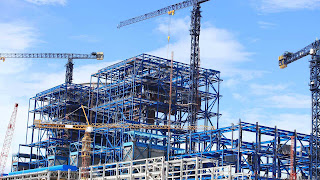
It’s getting harder to believe, but Canberra’s forefathers wanted to create “a garden town, with simple, pleasing, but unpretentious buildings”. For most of its life, that’s how Canberra has been. Except that recently there has been an emphasis on towers that threaten to block views and plunge streets into shade. It’s not something any of us remember voting for. We are often told that packing people in more densely is good for the environment. It is said to mean less water and energy use per person. Except that it doesn’t, according to fascinating but little-known research commissioned by the ACT Environment and Planning Directorate and conducted by Patrick Troy, Mishka Talent and Stephen Dovers at the ANU. It found no significant difference in water and electricity use between residents of apartments and houses. While people with gardens used more water in summer, they were more careful in what they used at other times, acting as stewards of their environment. Apartment dwelle...

The slow and sincere journey towards reconciliation

Image
Most of us know about the Aboriginal Tent Embassy, but far fewer know about the first Aboriginal protest outside Old Parliament House, when it opened in 1927. Two Wiradjuri men, Jimmy Clements (also known as ‘King Billy’, pictured) and John Noble (known as ‘Marvellous’) walked for a week from Brungle mission in the Riverina. On arrival they insisted on meeting the Duke and Duchess of York who were there to declare it open. They told a newspaper they wanted to make it clear they had “sovereign rights to the Federal Territory”. The same newspaper reported some years later that when Noble was in trouble with white man’s law he stood up in court and said to the judge something like: “If it wasn't for Jimmy Cook you wouldn't be sitting where you are and I wouldn't be standing where I am”. Nine decades on, there’s finally some momentum for a treaty, at least at the state level. Victoria, led by Labor’s Daniel Andrews, is the most advanced, having appointed a treaty commis...

Tricked into forced marriage: cultures of control

Image
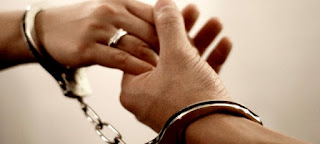
Eighteen year-old Fatima (not her real name) was tricked by her parents into leaving Australia. On board the plane they told her she had to marry a much older stranger. She didn't want to. They threatened her and took away her passport. The wedding took place behind closed doors. Distressed, she logged onto My Blue Sky, a relatively new website with a secure communications portal funded by the Australian government and operated by Anti-Slavery Australia. Its administrators contacted Foreign Affairs and arranged for a replacement passport. One of Fatima’s friends drove her to the airport. One of Anti-Slavery Australia's overseas partners helped fund the flight. It was a perilous escape. Much could have gone wrong, but Fatima made it home. Others aren’t as fortunate. “I am just worried about all the women and girls who don't contact us,” says Professor Jennifer Burn, the director of Anti-Slavery Australia which is housed in the law faculty at the University of Techn...

Surely arms dealers shouldn't fund the War Memorial?

To hear Brendan Nelson tell it, arms manufacturers have a patriotic duty to fund the Australian War Memorial. It's about "completing the loop", he says. And it's certainly not crass. "You need to know that the man on behalf of BAE Systems with whom I negotiated the sponsorship of our theatre, the BAE Systems Theatre, himself spent over 30 years serving our country in the Royal Australian Air Force and his own father was killed in the service of our country," the War Memorial director told Radio National in May. BAE Systems sells guns, bombs, submarines, jet fighters and components for nuclear weapons. Its customers include Chile, Romania, Saudi Arabia, South Africa, Tanzania and Qatar. It maintains Australia's Jindalee over the horizon radar. ​The former defence minister says ​the British firm employs 4000 Australians. "Of course that company needs to be involved in the Australian War Memorial," he says. "What makes me angry are the ...

'I believe you and I will care for you': After the Royal Commission

So big has been the impact of the Royal Commission into Institutional Responses to Child Sexual Abuse that one denomination, Anglican, in this part of Australia — the Diocese of Canberra and Goulburn — has paid out four million dollars to victims over the past three years. Without alarm, the man who was until Easter Anglican Bishop of the Diocese of Canberra and Goulburn told me the compensation costs would only increase. We conducted an ‘exit interview’ in the weeks before he stepped down. “What we want to do is be generous and kind and Christian,” he told me. “We've got facility with our various agencies to draw down money when necessary.” Stuart Robinson is in no doubt that a national redress scheme is essential, but says it’s just one approach. “Parallel to that, we will be working with people for whom that won't work,” he says. “A one size fits all approach is not the best - there have to be different entry points for people to be cared for.” “We are working with...

Rising education inequality should worry us all

In the opening pages of Aldous Huxley's famous dystopian novel Brave New World we are introduced to the Social Predestination Room. On a tour of the room, a supervisor rubs his hands and points to the hatching embryos. Babies will emerge as "socialiased human beings, as Alphas and Epsilons," especially grown to be less intelligent. A keen student asks why the temperature and oxygen levels are set where they are. "Ass!" says the director, "Hasn't it occurred to you that an Epsilon embryo must have an Epsilon environment as well as an Epsilon heredity". I was reminded of the explanation while reading What Price the Gap? Education and Inequality in Australia , a new report from the Public Education Foundation (PEF). It finds that inequality in educational outcomes actually increases as Australian students move through their school years. In other words, disadvantaged students become more disadvantaged over time. Examining six years of testin...