Posts

Alongsiders in Cambodia - Modern slavery exposure tour part 2
Image
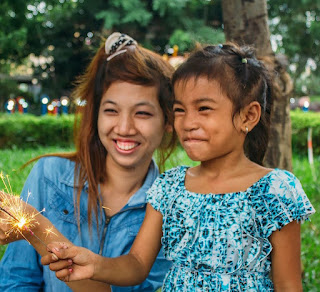
I had the privilege of travelling to Cambodia and Thailand this year to see modern slavery for myself. It was challenging but it was also full of hope as I got to see what good looks like. Power and poverty Modern slavery is fundamentally about an abuse of power. It takes many forms, on a continuum with other forms of exploitation. It is an affront to basic human rights and human dignity, which Christians regard as inherent in all who have been created in God’s image. In every case of modern slavery people are denied opportunity and personal freedom. What struck me travelling to Cambodia was how poverty, poor governance, internal conflict and corruption create the perfect cocktail for modern slavery to thrive in, with women and children being the worst impacted (the US State Department estimates that 800,000 people are trafficked across international borders each year, 80 per cent of them women and about half children). Gender imbalance Cambodia, which many Australians have v...
Victoria should make the ACT schools think again about rush into screens

The Victorian Government ought to be congratulated. From next year it will ban the use of smartphones during school in all state schools. Schools are where we expect our children to be safe, to develop co-operative and pro-social skills, and to grow their capacity to focus and become critical thinkers. Smartphones blunt those skills. They are (in the main) a tool for distraction and a weapon for online-bullying. Social media is fueling anxiety. Victoria should make the ACT think about its headlong rush into screens in schools and a mental health crisis. If adults are distracted and harassed by technology in the workplace, then you can be sure that children and young people are too, except that it’s worse for them because they have less wherewithal to withstand it. The part of the brain that controls decision making and considering consequences is less developed. Limiting access to smartphones in schools won’t stop bullying. It’s an old-age problem that starts offline and more ...

Seafood - Modern slavery exposure tour part 1

Image
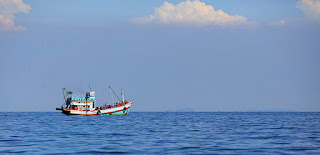
As a board member with STOP THE TRAFFIK Australia, I recently took part in an exposure tour of south-east Asia to see examples of what slavery looks like today – and the good work being done to combat it. I am a relatively new advocate in the campaign to end modern slavery. It wasn’t hard joining, because I could see that Jesus Christ, the holy troublemaker, the revolutionary Messiah, lived in a world not unlike our own. There were slaves and masters then and there are slaves and masters now. It’s just that today, despite our access to 24/7 news media, slaves are largely hidden. In fact, the risks of becoming a modern slave are rarely visible to the victim, until it’s too late. There’s a story I heard that illustrates this. Cho, not his real name, was 15. He and his Burmese family were barely able to afford to eat. Then someone offered him a job in a factory. After being transported to an unknown place, Cho was locked in a room. “I thought, ‘Why do they have to lock the door?’”...

Post election: Ken Wyatt's historic gig and daring to hope for Australia reMADE

Image
What a Reconciliation Week. Not only were we reconciling differences after a bruising election, but a respected Indigenous man was appointed Minister for Indigenous Australians, the first Indigenous Australian to be given that responsibility. Ken Wyatt was subjected to racist taunts during his campaign for the West Australian seat of Hasluck in 2010. After his narrow win for the Liberals, some people who voted for him complained they didn't realise he was Aboriginal. He was born on a mission farm, a former home for young Indigenous children removed from their families. His mother was one of them. In his maiden speech Wyatt thanked Kevin Rudd for the 2008 national apology to stolen generations. When he heard it, in his office in the West Australian department of health where he was director of Aboriginal health, he cried. "My mother and her siblings, along with many others, did not live to hear the words delivered in the apology, which would have meant a great deal to t...

Time to recast Australia's role in the region

Image
A new or re-elected government will give us a chance to better support our neighbours in Asia and the Pacific. The behaviour of the last one hasn't been good. It has repeatedly used the aid budget as a sort of automatic teller machine to take money from development in order to get its budget in order. A glaring example was the $55 million dollar refugee resettlement deal with very poor and dictator-led Cambodia. About $40 million came out of aid while $15 million was directed for resettlement services and support. Signed in 2014 by Scott Morrison as immigration minister, it was an abject failure. Only four people accepted offers of resettlement from Nauru. Only a Syrian man (with his family) is left but he's now hoping to move to Canada. "Why is your country doing this?," perplexed Cambodians asked Australians in Phnom Penh at the time of the deal. "We all know where the money will end up." Corruption permeates Cambodia. The deal wasn't directed (a...

New media and violence: an old problem meets the modern era

Image
History is littered with examples where propaganda has led to appalling acts of violence. That's why the rise of social media in the hands of extreme groups is a deep concern, as is the role of public figures in potentially inflaming hate. Who could forget Rwanda. Twenty-five years ago this month the world heard of the genocide against the Tutsi. I was in South Africa covering that country's historic election of Nelson Mandela, a moment of euphoria, when shocking news trickled in of the mass murder of up to 70 per cent of Rwanda's Tutsi people by members of the Hutu majority. Civil war had been brewing in Rwanda before April, 1994. But the use of the media in skilled hands brought ordinary people, who had lived together for hundred of years, to extreme violence. The Tutsi were labelled as demons, rich and avaricious, out to get the Hutu. The Hutu were called on to kill members of a Tutsi rebel group that threatened the government, and their "accomplices" -...

A Christchurch reflection

Image
Like many around the world, I have this week found myself in dismay-driven prayer, heartfelt hope for the world to be better, safer. As a person of colour, it is deeply concerning that the alleged perpetrator in the Christchurch massacres is an Australian citizen espousing white-supremacy and publishing a manifesto of hate. The rise of right-wing hate ideology is indisputable. The Internet has helped the cause. Social media has made white-supremacists more visible and international. In small, bizarre and accumulative ways, a fear of Muslims, that objectifies them, has shown its ugly head online. Platforms including Facebook, Instagram and YouTube have not exercised as much moral authority as they should have. They have relied on pressure from individual governments, rather than being proactive from the get-go in self-managing and limiting hate-speech and the live-streaming of violence. I have long worried about social media’s hunger for gut-wrenching and gratuitous content; it...