Posts

Chocolate: still tainted by child labour

What is your New Year resolution? To get fitter and eat less sugar, including chocolate? There’s plenty of other reasons to re-think our love affair with chocolate. It will come as a surprise to many that hazardous child labour persists in the mainstream production of cocoa. For 20 years global brands that produce chocolate have promised to tackle what has been the biggest single human rights issue in the sector. A  recent report  from the University of Chicago shows they have a long way to go. In 2001, popular brands including brands Nestlé, Mars and Hershey and cocoa industry representatives adopted the voluntary  Harkin Engel Protocol  and then the  Framework of Action to Support Implementation of the protocol , signed with the governments of Ghana and Côte d’Ivoire where two-thirds of the world’s cocoa comes from. Not only would child labour be eliminated, but the sector would become 100% certified. Disturbingly, hazardous child labour has increased and...

It hurt as I breathed: history repeats itself

Image
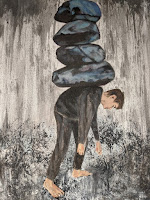
“They would catch me, I saw, half turning round to see my rear but still kicking my heels forward. ‘Nigger nigger - catch a nigger by the toe, eeny meany miney mo!’.” So begins a story by African American Peggy Dye, describing her childhood when she crossed uptown Illinois to study in a majority white school with a small black quota. It was a school her parents encouraged her to attend, knowing she was smart. But there were risks. It was a school full of white boys who thought all Negroes (the word used) were “cold-black and violent”. They’d chase her home. “‘Get away from me!’ I panted as I pumped my 18-inch legs. ‘Please!’ and I felt the tears in my eyes. I was running and trying so hard not to fight, choking down the anger. I was resisting. I felt a big pain in my stomach. Was it anger? It was a rock and it rolled inside my ribs and hurt as I breathed.” Still running It was the late 1940s. Dye had just started first grade when her father told her, “‘It’s a war baby, and don’...

Feed Play Love: Laying the groundwork for a healthy digital family life

The COVID-19 lockdown has, among other things, laid bare our modern lives and how dependent we are on digital technology for just about everything. Creating boundaries with our children around screen-use just got a whole lot harder. This period has also provoked questions around the role of education. What is the purpose of school? Students can find information on everything online but knowledge found there is only really useful when it's integrated with what they know. Integration is supported by conversation. A class environment can provide that, so too, the home. Last September I recorded this podcast which explores some of the above. Listen to Feed Play Love: Laying the groundwork for a healthy digital family life here

Mental health: making real productivity gains post COVID

Image
For many of us, forced to work at home or to not work at all, the COVID-19 crisis has driven home the importance of mental health and how work interacts with our sense of wellbeing. World leading researchers and mental health experts have warned that as the virus subsides, we will see a big surge in the need for mental health care and pain management. A stretched mental health system will be under increased pressure. Young people, hit hard by the closure of schools and hospitality businesses, are going to be disproportionately affected. So it’s with anticipation then that the Productivity Commission will soon release its final report of its 18-month inquiry into mental health and productivity. The draft report, released in October, was a good start but the final report will need to be more holistic - with the social determinants of mental health as a guiding principle - to inspire confidence. The draft report found that the economic costs of poor mental health were shockingly...

Being Coloured - Race and politics in the New South Africa

I am reading  Born A Crime.  the recently published memoir of comedian and television host Trevor Noah . Noah grew up in South Africa. His autobiography is a powerful reminder of the brutality of racism that keeps the world's colonised people poor.  Noah speaks to me at many levels as an Australian who spent my first 6 years in South Africa classified as 'Coloured': a person of mixed race. Noah doesn't paint a flattering picture of the coloured community. In 2008 I produced a radio doco on my journey 'home':  Being Coloured . In it my grandfather observes, "You were what they made you". Apartheid South Africa divided not just its black and white citizens but other race groups. The political system bred violence and pettiness. Its legacy continues. I travelled back to Durban with my mother, Lillian, to try and discover my ancestry and what it meant during apartheid to be 'Coloured'. Does the label still stick in the new South Africa? The d...

The earth is breathing easier. Can it beyond COVID-19?

Image
COVID-19 is doing a lot of the work environmentalists could only dream of. Major cities and their birds are breathing easier. Across China, smog has given way to the colour blue. Even the snow-capped Himalayas are visible from parts of Northern India for the first time in local’s memories. Here in Australia, bike sales are up and with fewer cars on the road fewer wild birds and animals are being injured. Seismologists are reporting that the upper crust of the Earth is quieter . Less transport means much less pollution. Global emissions are now predicted will fall by 2.6 billion metric tons in 2020, the largest fall in history. At home, many of us are returning to our gardens. There’s a shortage of seedlings at Bunnings. Even apartment dwellers are starting balcony gardens and “grow your own” food clubs. Might some of the changes wrought by coronavirus last? There are reasons to feel some optimism: 1. In this instance the prime minister has acted on the science. Rather t...

Finding the sacred in a time of coronavirus

Image
What happened here? The world is spinning more slowly. At least it feels like that. And yet many of us have more to do, needing to manage complex emotions and children home from school for the foreseeable future. As quiet as it is, our new life has an intensity about it, testing us in ways that can thin our patience and our love but also in ways that might be formational, even transformational. It isn’t easy tuning in to what this time, locked down, has to teach us. Frankly, clarity and purpose can feel elusive. It’s easy to forget what day it is. And, with family life contracting and nowhere to hide at home, our imperfections are on show, amplified, revealing truths about us and our egos. As Franciscan friar Richard Rohr told his email subscribers last week, life is not about us, but we are about life. Try telling that to the teens. My family and I spent the first week of relative isolation pushing furniture around; rearranging our domestic infrastructure to create spaces for...

Political donations and the rise of corporatocracy

Image
Vested interests have always sought to influence politicians but the problem of buying influence has in recent time developed into a cancer undermining the health of Australia’s democracy. Mining industry influence is a key example. The Australian Conservation Foundation (ACF) has analysed a dump of 2018-19 donations data on the Australian Electoral Commission’s (AEC) website. It found that the fossil-fuel industry doubled its donations to the major parties the past four years. The Coalition gets the lion’s share, but the amount Labor is ‘gifted’ is not far behind, certainly not insignificant. Drawing on four years of data from 2015-2016 to last financial year, the ACF confirms that the Minerals Council of Australia (MCA) gave money to both Liberal and Nationals-aligned entities as well as Labor entities. MCA donated to the Hunter Federal Campaign Account of the Australian Labor Party, an electorate in coal country that was retained last year by Labor’s pro-coal MP Joel Fitzgibbo...

After fire, smoke and hail, can we hope to find common ground?

Image
In the wake of the South Coast fires that ravaged Mogo and Cobargo and other towns, are stories about the lamentable loss of Aboriginal heritage sites. When sympathetically raised with an Aboriginal leader, I was reminded that all Australians lost sites that mattered to them. Whether it's pilgrim huts in the Alpine region, shell middens on the coast, or species brought to the brink of extinction, the bushfire carnage represents a shared loss, and one that can never fully be measured in dollars. Across cultures, there is a deep sadness that children will not enjoy places of historic and natural beauty in the same way that their parents and elders did, recognising that all of us have spiritual connections to place. The bushfire disaster and this coming weekend's Australia Day both happen to fall in the Christian season of "epiphany", a word which for Christians refers to the revelation or appearance of Christ, and in more common usage refers to a sudden and stri...

A mother's climate change lament and other paintings

Image
Find the article on my art exhibition on now at the ACT Legislative Assembly

Australia's bushfire emergency

I've been glued to the news for days, restless, easily distracted, feeling helpless. I want to stay informed but at times, it's too much. A bloke on the south coast of New South Wales said, ‘It was like world war three’. With rising anxiety, the threat of losing the lot, blackened daytime skies and scared small children wearing masks and adults holding their breath, it was. The enemy, fire, has been acting for months but the last few days have been truly frightening. These are difficult times, hours that have challenged and tested the very rhythm of everyday life - at a time of year when most of us are on holiday, usually snatching time for rest and play. These days have demanded leaders with empathy, respect and wisdom. Monday this week, exactly twelve days after Christmas is known as the Epiphany. It remembers the journey of the Magi - the three wise men - to Bethlehem. Many of us have had our own very personal epiphanies this season; searing experiences that have...

The future of work as the digital disrupts

Australian students are continuing to slide in international performance tables, with ACT students going down about as fast as (but typically still doing better than) those in the rest of Australia. The Organisation for Economic Co-operation and Development conducts its Program for International Student Assessment (PISA) survey of performance in reading, maths and science every three years. It finds that although the performance of Australian students is close to the OECD average, unusually among developed countries, Australia's performance has been getting worse over time. Should it worry us? That depends partly on what we think will be needed for living in and surviving the rest of the century. There's no necessary reason to think it will be maths and science as we've known them. Machines might do those things for us. But a mid-year report by Deloitte Access Economics finds employment has been growing fastest among the least routine jobs, the ones that machines ca...

A shameless deal that dare not speak its name

It was always going to be a challenge, even with the signatures of thousands of doctors and advocacy by health groups, to keep Medevac. On Capital Hill, hearts have been hardened towards refugees over time, for so long. With help from Labor, the Coalition has entrenched a harsh offshore prison system that has created profound sickness. In his stunning memoir of time spent on Manus Island detention centre in Papua New Guinea, Kurdish Iranian journalist, Behrouz Boochani, describes the extraordinary lengths detainees must go through to get any basic care. There are arbitrary rules and forms to fill out just to have a toothache seen to, knowing all along that there are no dentists on the island for detainees. It would be absurd and comical if it wasn’t so serious and cruel. Other rules, like excluding games and music, squeezing the agency and hope of people who had arrived on Manus and Nauru relatively well, piled up without any logic. People went mad with pain with no light reli...

Book review: Families in the Digital Age

Not turning my child into a zombie with no friends (but lots of likes) by Devin Bowles  Toni Hassan’s Families in the Digital Age: Every parent’s guide is an invitation to deep thought and  dialogue about the effect of social media and pervasive smart phones on our children. My interest in  this book was initially captured because I am a father, and this book should be mandatory reading  for all Australian parents. Before long, Hassan convinced me that the public health implications are  profound. This hugely important topic has gone largely unnoticed, in part because personal digital  technologies have rapidly become so integrated with our lives that they do not invite comment or  introspection. There are no ‘digital natives’, even if younger generations have been given that label. As a species,  we evolved brains that grow and change based on our environments. Our brains develop as they  should only when environments and stimuli are right....

Climate health has become a mainstream issue, let's treat it like one

Image
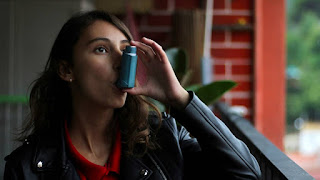
It's frightening not being able to breathe. Having had asthma since birth, managing it is part of the rhythm of my life. Preventative medications have kept me alive, but, like millions of Australians, I occasionally get a small dose of terror when my chest tightens and my blue inhaler is empty or nowhere to be seen. Bushfires have pushed up pollution levels to many times above safe levels in many parts of the country this past week, including in Sydney and Brisbane, which for a few days had air worse than in Beijing’s. Canberra too has been blanketed in dust. We are inadequately prepared for what will become the new norm. People living with asthma (more than one in ten of us) and others sensitive to smoke will have to stay indoors for longer. Prolonged poor air quality will hurt us all. The latest edition of the MJA–Lancet Countdown on health and climate change came out this month, offering a global and an Australian national assessment. The report examined 41 indicators ac...

Meet the neighbours: the trick to Halloween treats

Image
I both love and hate Halloween - probably, honestly, more the latter. It's not that it's "evil" or "of the devil". It's that it's so commercial. For weeks my inbox has been inundated with messages urging me to "avoid the fright" and "earn spooky bonus points" in attempts to get me to buy junk food I don't need. Halloween popped into Australia's consciousness in a vacuum. There is no storytelling attached to it, no cultural significance, no deeper meaning. Elsewhere it derived from a Christian feast on the eve of All Saints' Day, which is November 1, a time for remembering the dead, intertwined with the agricultural rituals of folk communities who gave thanks for the year's harvest. Here, it's just all about the sweets. In Mosman, on Sydney's North Shore, where two streets get besieged by children from all over the city, The Sydney Morning Herald reports some parents are spending $400, some as much...

Time to reclaim the lifeblood of human society

Image
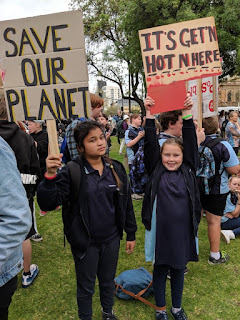
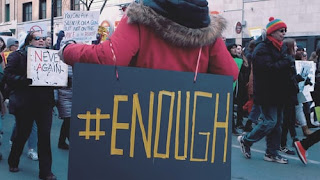
In the lead up to last week’s School Strike 4 Climate, a tweet jumped out at me. “Why are so many young people depressed?” it asked, and then presented two different answers. Teenagers: The adults have f***ed up the planet and our future. Adults: It’s the phones. Of course, both might be true. Depression might be sparked by the fate of the planet, but then fed by incremental updates and outrage delivered to smartphones in our pockets all the time. It isn’t what used to happen. Panic about 1980s' concerns such as nuclear war weren’t amplified and fed back to us through a hyperconnected echo chamber. It most certainly is bad for our health. Studies show that as screen time increases, so too do rates of teenage suicide and depression. Lead researcher Jean M. Twenge of San Diego State University compared US statistics on teenage suicide deaths, suicide-related outcomes and adolescents’ depressive symptoms, with new media use. He found adolescents who spent more time on new ...

A public health issue: Alan Jones and his violent metaphors

Image
Countless firms have pulled their support and advertising from Alan Jones’ radio program after his Jacinda Ardern comments. Just what will it take to suspend him? The managers of the station should take him off the airwaves, but not just for reasons of language. The reason to pull him off is public health. Let me explain. One of the greatest threats to health is violence. Australia has a shocking record of violence against women. On average, one woman a week is murdered by her current or former partner. Overwhelmingly, perpetratators of domestic or family violence against women and children are male. Factors associated with gender inequality are the most consistent predictors of violence against women including male peer to peer relations that emphasise aggression and disrespect towards women. Jones, who appears to have trouble with women of influence, feeds and helps legitimise an already-existing set of attitudes that condone violence. There is mounting evidence that pub...